A jacket fastens. The label gives your size. Yet something feels unresolved: the shoulder extends too far, the front lifts, the body seems lost in the cloth. Between the right measurements and a cut that suits you lies a careful study of proportion.
At Sandra Loï, that study begins with the person. Her posture, her gestures, what she likes to reveal and the presence she wants to convey. A slight figure may favour a defined shoulder; a woman with curves may prefer a straight line. The body offers information. Style remains a choice.
Beyond the size label
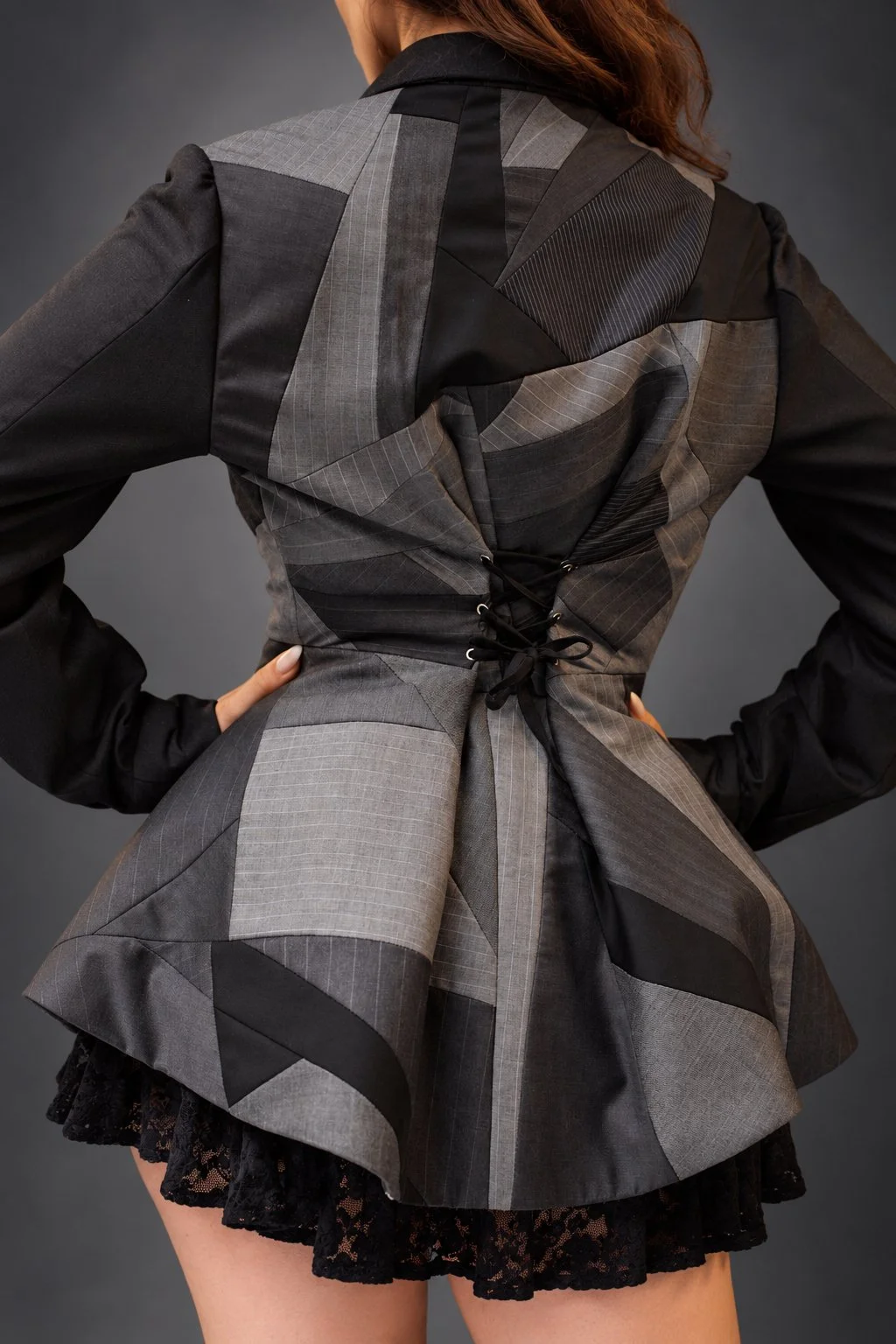
Two women who wear the same size may have different shoulder widths, bust positions and proportions. A jacket that accommodates the bust may be too broad across the back. Trousers that sit comfortably at the hips may gape at the waist. Moving up a size can simply shift the difficulty elsewhere.
For a slight frame, reducing widths is not always enough. Armhole depth, torso length and the scale of a lapel also shape the balance. Where the bust or hips need more room, the question is where to place it. We look at where the garment rests, where it follows the body and where it stands away.
These observations allow the cut to respond to the wearer. They also leave room for a clear intention: women with very different figures can wear a generous jacket, wide-leg trousers or a defined waist.
Fit and silhouette
Fit raises practical questions. Does the fastening stay in place? Is there tension across the back? Does the waistband hold its position when you sit? Cut also determines the silhouette: where the jacket ends, how the shoulder is drawn and how the upper and lower halves meet.
A comfortable piece can still create proportions you dislike. A garment that looks compelling in the mirror may restrict the first movement. A fitting needs to address both. “I would like a sharper line here” expresses a different need from “I feel it pulling here”.
Understanding the method
An existing pattern may suit a client and allow useful adjustments. What matters is the extent of those adjustments. Length, shoulder width and pocket placement cannot always be altered with equal freedom within a given construction.
In its own standards, the Savile Row Bespoke Association describes an individual pattern drawn by hand by a master cutter. This offers a useful reference for looking beyond terminology to the process itself.
For a commission, ask how the pattern begins, which proportions can be developed and how they will be assessed. The process then becomes as clear as the name used to describe it.
Finding your line
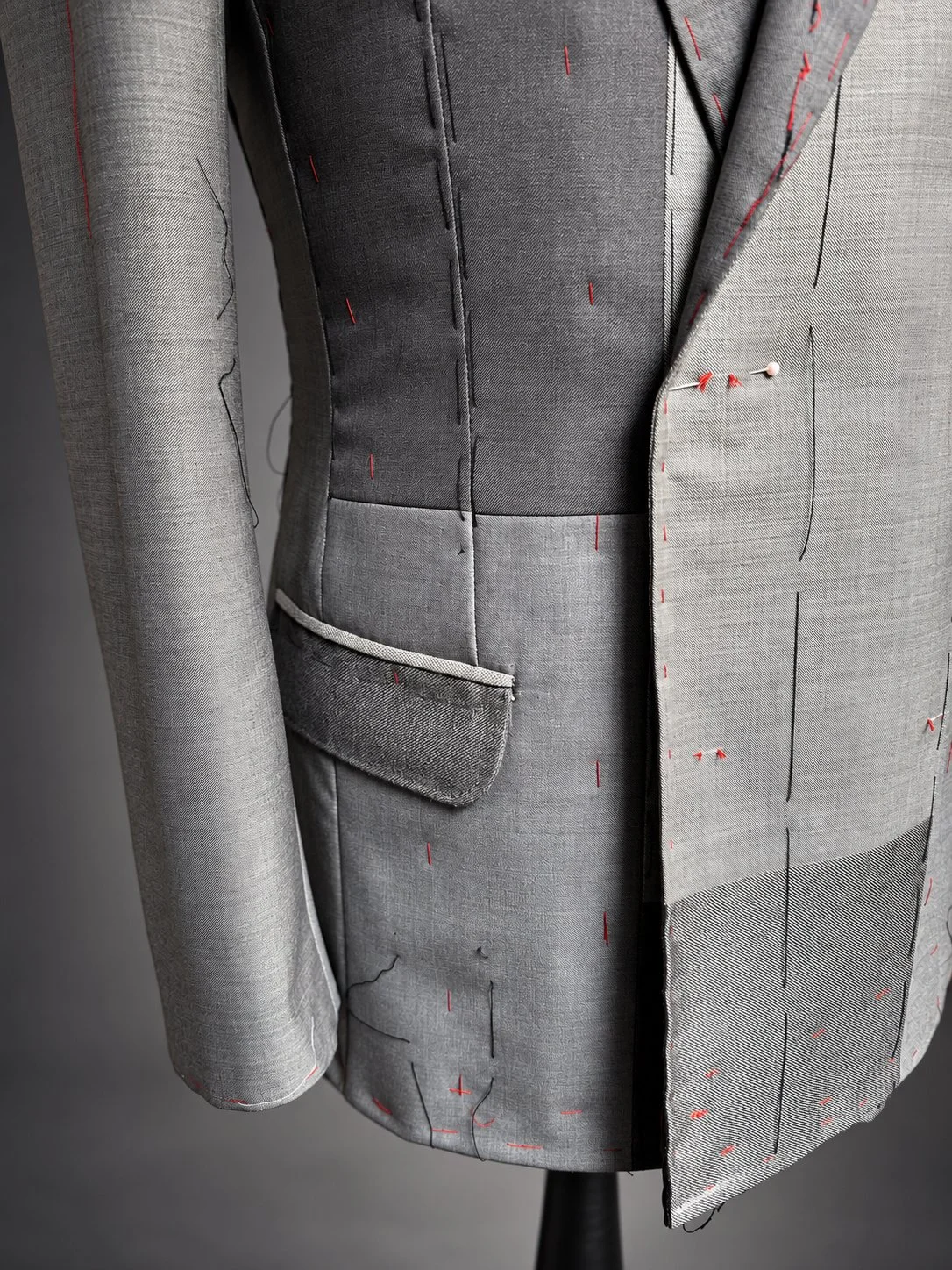
The Maison describes a process that includes an initial study, a toile and fittings. Measurements become a garment on the body, and its drape can then be refined. A preference may evolve once you see it on yourself: a narrower lapel, a shorter jacket, volume retained through the leg.
Bring a piece in which you feel at ease and another that leaves you dissatisfied. Comparing them gives useful insight into your relationship with clothing. The aim is clothing that feels like you, in appearance and in wear.
Discover bespoke at Sandra Loï.