
A blue seen in a gallery. A red that stays in the memory. An ivory worn for years. Colour often enters a commission before the garment is drawn. It can inspire a piece, then become a very practical question when the cloth is held beside the face.
For Sandra Loï, the silhouette offers a space in which to compose. Hue, material and surface meet. The same wish for blue might lead to a daytime suit, a sculptural evening piece or a detail revealed only when a jacket opens.
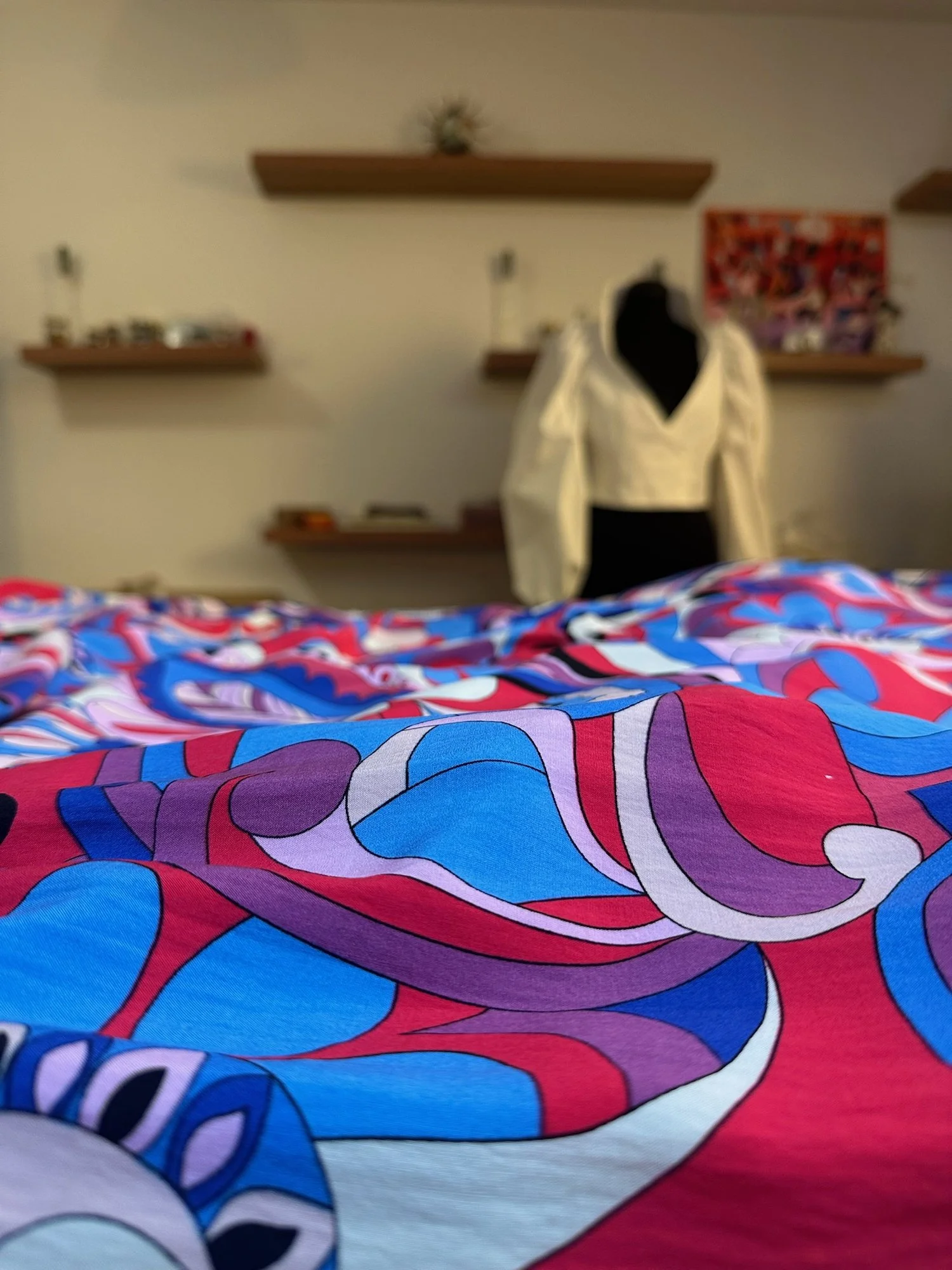
Colour in context
In Interaction of Color, Josef Albers explores how a colour changes visually in relation to another. The Albers Foundation presents his approach through observation and comparison. Applied to clothing, it invites us to consider a shade within its surroundings.
Hold two fabrics near your face, then look at them with the top and jewellery you intend to wear. Step back to see the whole before returning to the detail. A shade loved on a small swatch may become dominant across an entire jacket. Another may find its appeal through a particular pairing.
This exercise builds personal reference points. It allows for your taste, usual make-up, hair colour and the effect you seek. You may enjoy a shade for its softness one day and its contrast the next.
One shade, several surfaces
Velvet, satin and matte wool do not reveal colour in the same way. Surface texture, the direction of the fabric and its folds change the distribution of light and shadow. Handle the sample, let it fall and view it from several angles.
Daylight and the lighting of the intended venue offer two useful readings. For a photographed reception, a camera test can complement the mirror. An image helps compare options; it cannot replace the cloth or the experience of its nuances.
In The Immortals’ Wardrobe, Narcisse brings blues together through patchwork. Colour emerges through neighbouring tones and changes of texture. This suggests another starting point for a commission: exploring a family of shades before seeking a strong contrast.
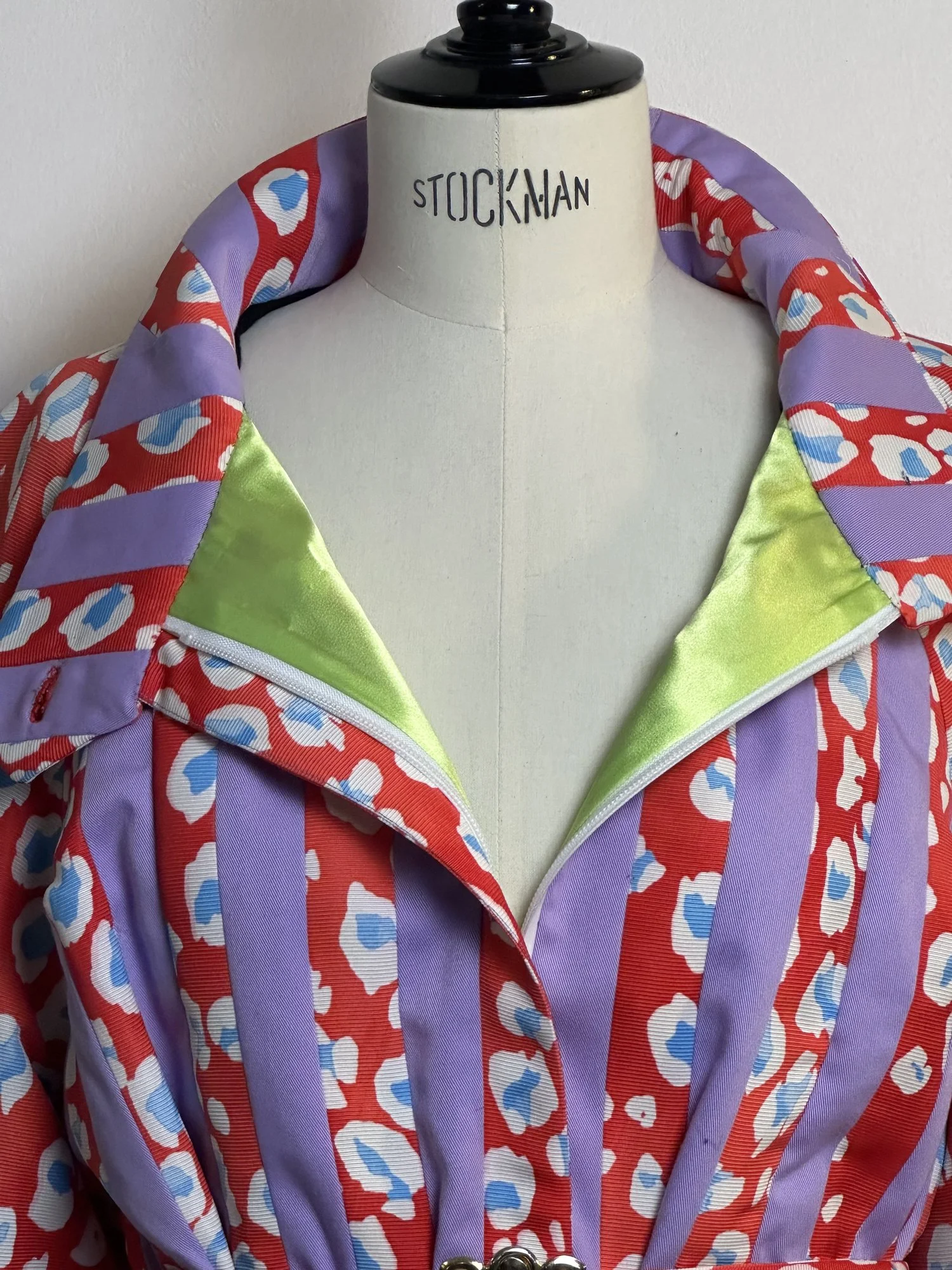
Deciding where colour belongs
You might want a monochrome ensemble, a jacket that holds the eye or an almost private detail. Each intention calls for different proportions. Before multiplying combinations, decide how much of the silhouette you want colour to occupy.
A contrasting lapel frames the face. A lining appears in movement. Coloured trousers change the balance of a quieter top. Assess the whole silhouette, including shoes. Colour can connect pieces as readily as distinguish them.
A personal palette
Gather a few references you love. They may differ widely: a garment, a length of cloth or a photograph whose colours appeal to you. Identify what attracts you in each. Its intensity, its depth, or the relationship between two surfaces?
A conversation with Sandra connects this sensibility to a cut and a purpose. A palette becomes personal when it reflects how you wish to appear. Choose the colour, then give yourself the freedom to wear it.
Arrange a meeting with Sandra Loï.