
Before the first cut comes the moment when cloth passes through the hands. It is lifted, folded and allowed to fall. Its colour attracts; its behaviour already suggests what it might become. A fabric gives direction to a commission, sometimes taking it beyond the idea formed from a photograph.
For a Sandra Loï suit, cloth is chosen in relation to the silhouette. A jacket held away from the body, fluid trousers and a sculptural sleeve ask different things of it. The material must meet both the proposed cut and the life intended for the piece.
Beyond the fibre name
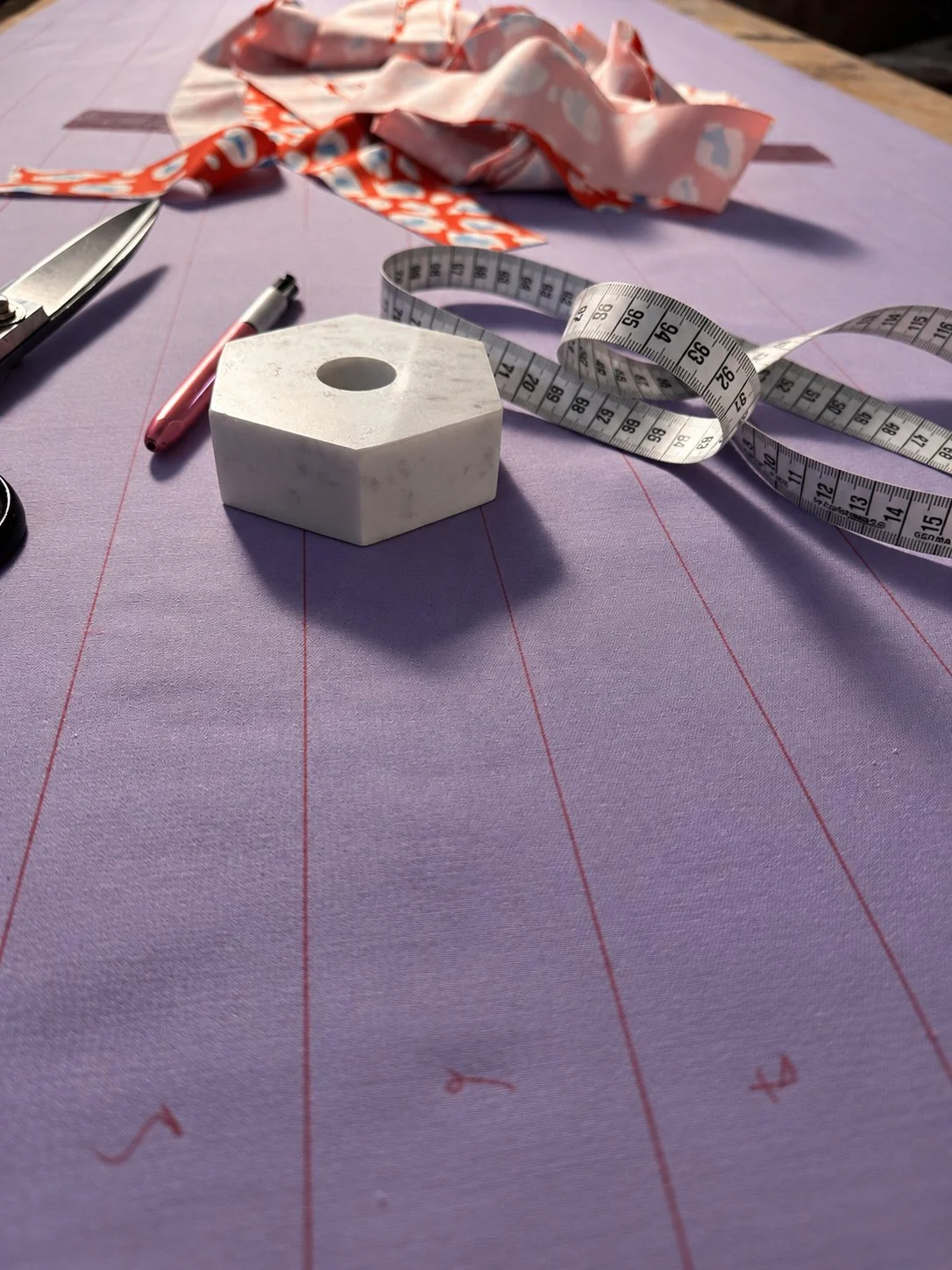
“Wool” or “silk” identifies a composition without describing the whole fabric. Yarn, weave, weight and finishing also influence its surface and body. Two fabrics made from the same fibre can produce very different folds and sensations.
Woolmark distinguishes, among other processes, the preparation of woollen and worsted yarns. This helps explain why wool encompasses such varied surfaces. Choosing a garment means returning to the specific sample offered.
A number requires similar attention. The Super S classification indicates the fineness of wool fibres. It does not replace a discussion of fabric weight, use or care. The highest number alone cannot determine the right cloth for a suit.
Watching fabric take shape
Lay the sample over a rounded surface and allow part of it to fall. Observe the depth of the folds and the distribution of light. Where a length of cloth or a reference garment is available, a larger area reveals more than a small square held flat.
A supple fabric can give a silhouette fluidity. A material that retains its shape may support volume. These first impressions also depend on construction: lining, internal support, grain direction and assembly also influence the result.
At the Victoria and Albert Museum, the study of a Balenciaga “tulip” dress reveals the role of silk gazar in its architectural form. The example shows how closely silhouette depends on the conversation between cloth and construction.
Considering the hours of wear
A piece reserved for one evening will be chosen differently from an ensemble worn every week. Consider duration, season, travel and contact with the skin. The fabric that first catches your eye should also suit the experience you expect from the garment.
Ask how the finished piece should be cared for. The answer concerns its complete construction, including lining and any embellishment. Advice appropriate to the fibre alone may not suit a garment assembled from several components.
Composing with Sandra
A bespoke project may begin with a precise wish: a clean line, a matte surface, generous movement. Fabrics can then be compared for what they contribute to that intention.
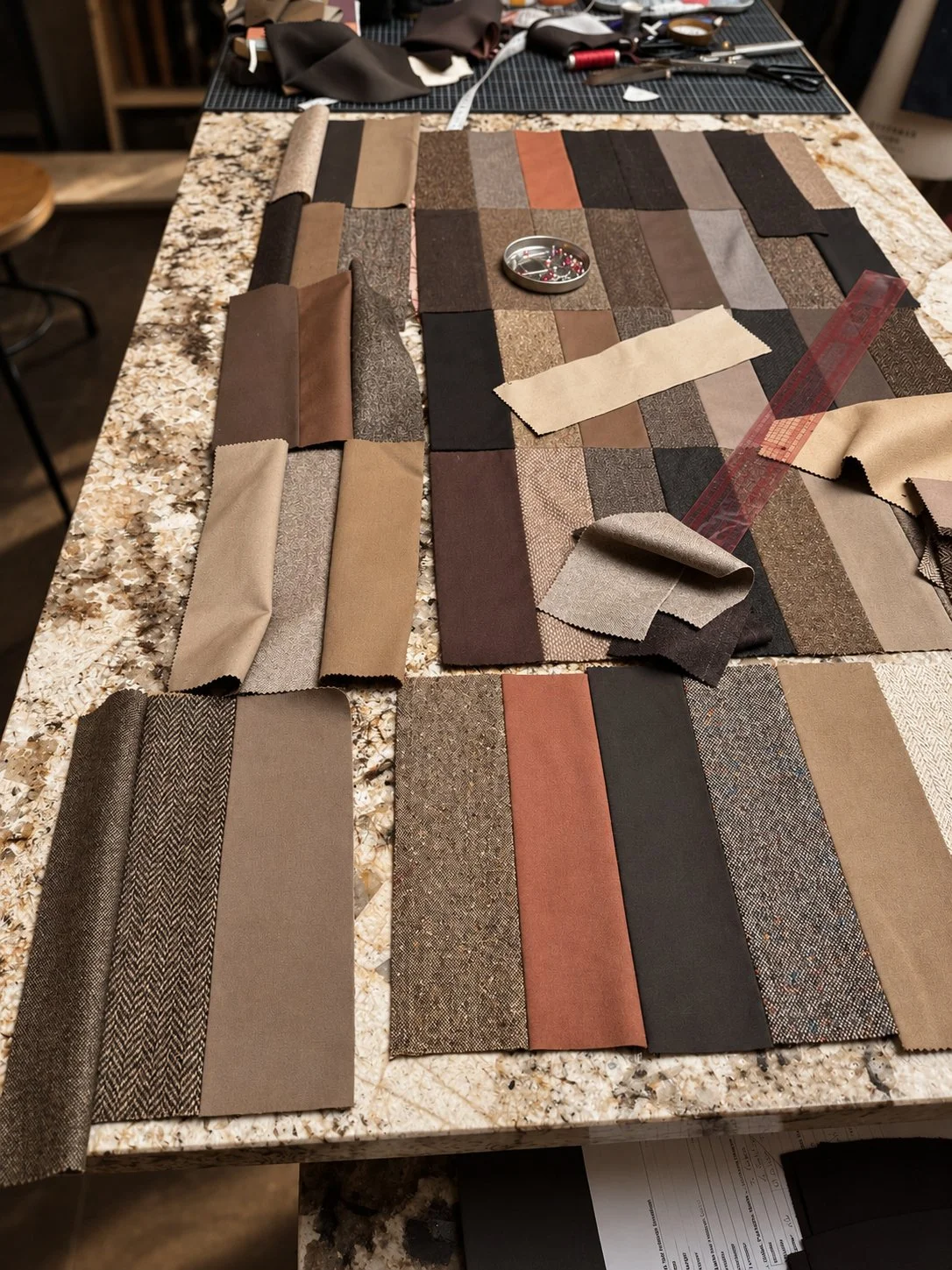
Patchwork, present in Sandra Loï’s work, makes this composition particularly visible. Each surface enters into a relationship with its neighbours. For a personal commission, the contrast can be pronounced or quiet, according to the project agreed with the Maison.
Bring a silhouette reference and describe the sensation you seek. The choice of cloth becomes more precise when its presence, cut and purpose are considered together.
Explore bespoke at Sandra Loï.
Sources
Woolmark, Wool Suiting and the Super S classification.
Victoria and Albert Museum, Secrets of Balenciaga’s Construction.