
Quiet luxury: learning to look at the cut
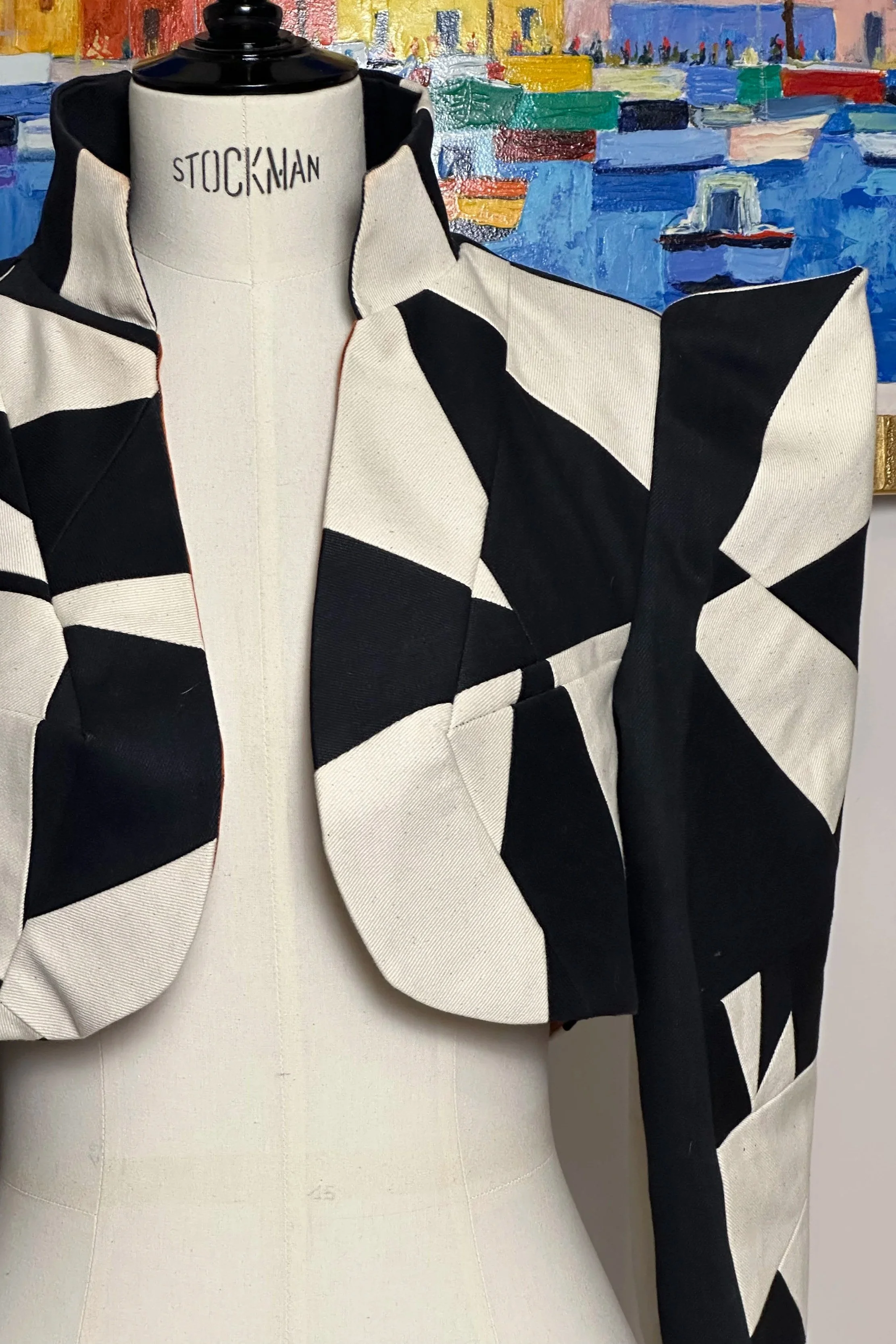
A discreet label is not enough to establish the quality of a garment. Neither is a neutral colour. To choose a suit for what it actually brings to a wardrobe, we need to look more closely: how it sits, how the material supports the shape and what happens when we move. Quiet luxury can then become a way of observing rather than a list of visual signs to adopt.
Discretion is not the same as neutrality
A beige ensemble may attract attention through its volume, while a patterned suit can feel entirely natural in its wearer’s wardrobe. Discretion depends on context and on the individual. It does not necessarily mean a restricted palette, the absence of ornament or a silhouette everyone would describe as understated. Different people can find ease in very different kinds of visual presence.
A logo raises a related question. You may enjoy a visible signature or prefer clothing without an obvious name. That preference alone does not establish the quality of the cut. Attention begins when we pause that judgement and examine the garment itself: its construction, intended use and relationship with what we are actually looking for in the piece.
This approach leaves room for distinctive creations. Sandra Loï’s patchwork can be expressive while inviting close attention to joins and proportions. A pattern does not prevent precision; a plain surface does not guarantee it. Both can be appreciated without placing them in an automatic hierarchy or assuming that one is inherently more sophisticated than the other.
Look at the silhouette before the detail
Begin a little way back from the mirror. Do the jacket length, waist position and lower volume form the ensemble you want? Does the eye go where you intended it to? This general reading gives details a context. A carefully worked buttonhole cannot resolve a proportion that does not correspond to the intended silhouette or your personal preference.
Then move closer to the collar, shoulders and fastening. Observe the garment in your usual posture and in motion. A jacket needs to be assessed according to its design: a deliberately extended shoulder should not be judged as if it were intended to follow the body closely. Distinguish a chosen effect from behaviour that bothers you, rather than imposing one standard on every silhouette.
Give the back and profile the same time as the front. They show how material is distributed around the body. If tension appears or an element repeatedly needs replacing, note when it happens. The useful question is whether the garment suits the intended movements, rather than whether it can look flawless for a few carefully held seconds.
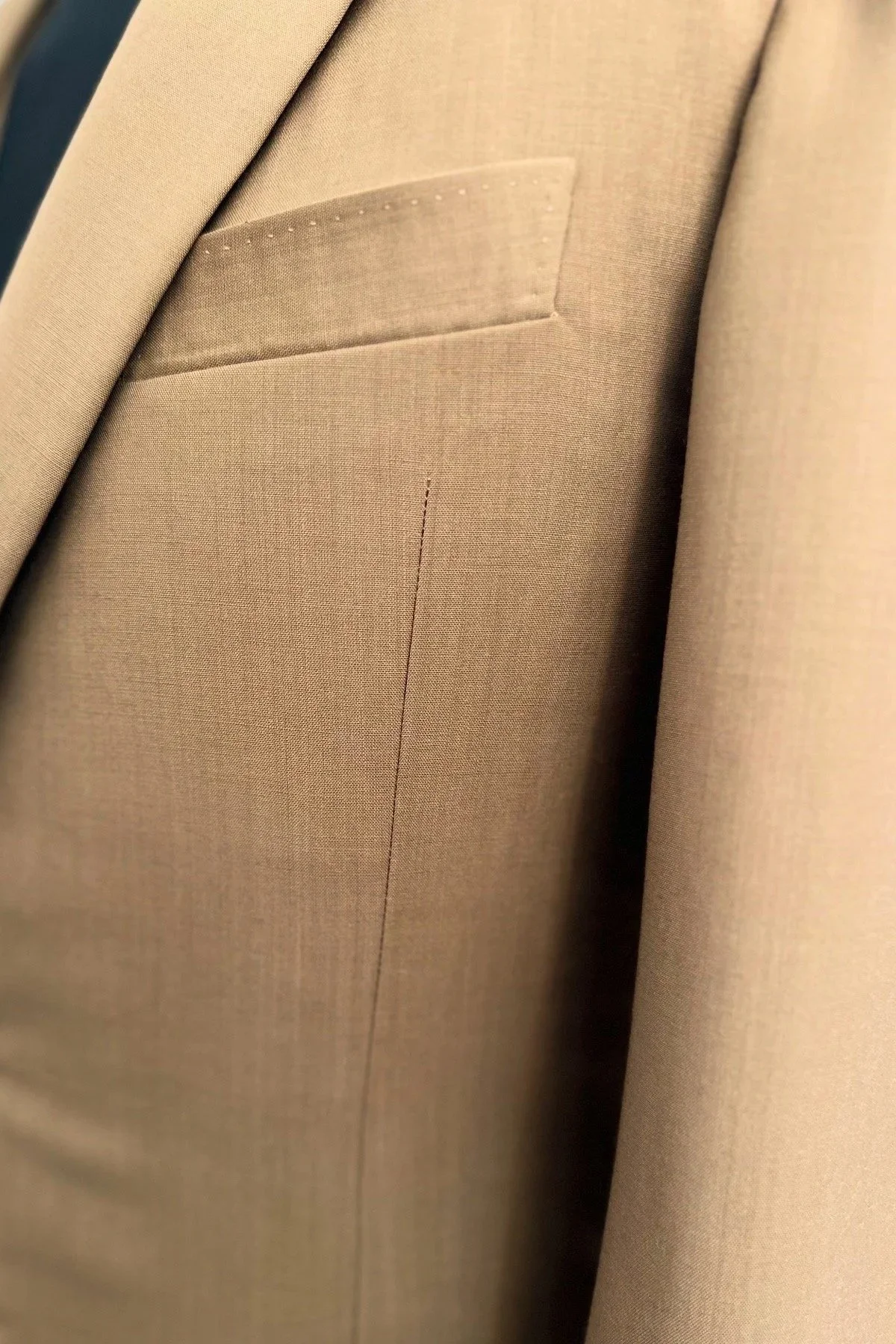
Looking at a pocket, a seam and their place in the composition.
Understand cloth beyond its fibre name
A fibre name does not fully describe a fabric. Weight, construction and finish also influence its behaviour. Notice how it folds, reflects light and feels against the body. A material you enjoy for eveningwear may not answer the needs of a day spent travelling between appointments. Selecting cloth means connecting its qualities with an actual use.
Care information belongs in that assessment. A delicate surface or raised decoration may require particular attention. That does not diminish its interest, but the care should fit your habits. A garment you rarely dare to wear because maintaining it feels difficult may not fulfil the role originally imagined for it within your wardrobe.
Nor should an appealing handle be treated as proof of longevity or environmental benefit. Those questions require separate information. Examining a fabric helps us understand sensation and use; it does not reveal its origin, production conditions or full impact. Keeping these distinctions clear makes it possible to appreciate the cloth without assigning claims that have not been established.
A detail gains meaning within the whole
A pocket, lining or button can attract attention for good reasons, but first consider what you expect from it. A pocket intended for regular use needs to be considered as functional; a fastening should be manageable; lining also needs to be assessed while worn. Care is not confined to whatever looks precious in a close-up photograph.
In patchwork, the boundaries between fabrics contribute to the design. Looking at their placement in relation to the collar, waist and pockets reveals how the surface organises the silhouette. Detail becomes a relationship between several parts rather than an isolated area to admire. This kind of observation can change what you notice first in a garment.
The same approach can be applied to everything you own, whatever its source. It helps explain why one piece works and another remains unworn. You may discover that a length, a sense of weight or an opening matters more to you than something previously treated as a priority. Those discoveries provide useful references for a future commission.
Choose a piece you can imagine wearing
Before ordering, picture the garment in two or three specific situations. What will accompany it? How often do you hope to wear it? What care are you willing to give it? The answers do not guarantee a lifespan, but they make the choice more concrete and reduce the distance between the desired image and the intended use.
Sandra Loï’s bespoke process offers a setting to discuss these expectations through cut, volume and fittings. Explore the Maison’s approach while keeping your own criteria in mind. A garment’s value often becomes clearest when what you enjoy looking at begins to correspond with what you enjoy wearing, in the ordinary as well as the exceptional moments of your life.
Explore bespoke creation at Sandra Loï.