
The wedding outfit after the wedding: thinking beyond the first day
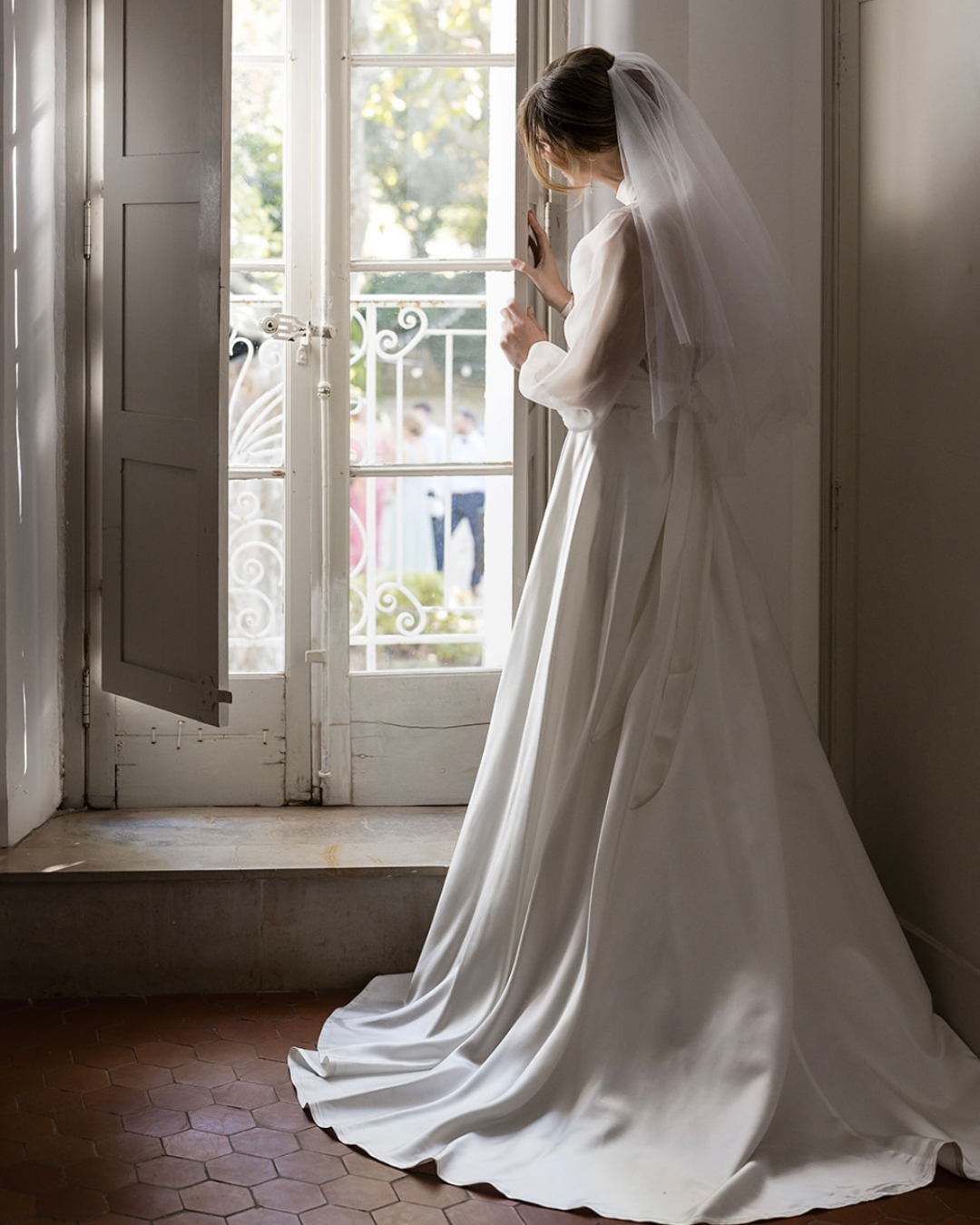
A fluid ivory gown, sheer sleeves and a veil: a wedding silhouette whose lines invite us to consider life beyond the first day.
A wedding outfit can retain its symbolic force while finding other occasions to be worn. Transformable designs and stories of reimagined dresses are contributing to this conversation in 2026. For a bespoke project, the useful distinction is between what you want to preserve, separate or change.
The wedding may still be months away, yet another date deserves a place in the conversation: the next time you might want to wear part of the outfit. An anniversary, dinner or family celebration. Imagining that moment takes nothing away from the wedding; it clarifies the relationship you hope to keep with the garment.
In its presentation of 24 April 2026, Tony Ward describes detachable overskirts within its Spring 2027 bridal collection. On 4 July 2026, British Vogue examines dresses transformed after the wedding. Two distinct approaches emerge: designing several configurations from the start, or revisiting a garment later.
Changing the silhouette during the wedding
A transformable outfit first answers the rhythm of a particular day. A volume desired for a ceremony may feel less practical at dinner or on the dance floor. A removable element, when designed for that purpose, can change the silhouette without replacing the complete outfit.
The idea deserves a proper trial. Who will help remove the element? Where will it be kept? Does the outfit retain a considered finish in each configuration? A successful change should be understandable and manageable in the circumstances in which it will happen.
Above all, both versions should be loved. If one feels unfinished or does not create the intended impression, technical possibility alone is not enough. The value lies in two coherent silhouettes, each suited to a particular moment, its movements and its atmosphere.
Wearing a piece again starts with a credible occasion
The prospect of rewearing becomes more concrete when an occasion can be named. Imagining a bustier with trousers already in your wardrobe gives you a real combination to consider. A vague promise to reuse everything leaves most decisions for another day.
Separates offer one possibility to examine. A top, skirt or jacket may sometimes join other outfits. Their independence still needs to be assessed. A piece whose length or finishing was conceived exclusively for its original pairing may not find another place quite as easily as expected.
Bring photographs of the clothes you might want to combine with it afterwards. This reveals practical questions: the position of a waistband, the length of a top or the relationship between volumes. A possible future use becomes part of the design conversation.
Later alterations depend on construction
Shortening a dress, changing a neckline and recovering a decorative element are different projects. Their feasibility depends on the garment, its assembly and the position of its embellishments. An appealing idea in a photograph therefore needs assessment on the actual piece.
Colour calls for the same care. Planning to dye an outfit after the wedding does not guarantee an even result. Fabrics, threads and applied elements should first be assessed by a suitable professional. It is better to clarify this possibility before making it a condition of your choice.
An alteration may also change the visual memory you keep. Some people experience that change as a welcome continuation; others prefer to preserve the outfit as it was. Taking time to decide after the wedding is an equally coherent option.
At Sandra Loï, begin with a personal project
Sandra Loï includes wedding dresses and occasionwear among the projects described in its bespoke experience. Pénélope, the bride of Le Vestiaire des Immortels, combines a bustier cut with ivory organza and hand-sewn pearls.
These points of reference open a conversation about a garment’s place in an important moment. If wearing part of the outfit again matters to you, express that in the first exchanges, alongside the venue, season and impression you want to create.
A request can be simple: exploring whether a top could join an evening outfit, keeping a symbolic detail intact or discussing several configurations. Each possibility needs to be considered and confirmed for the particular project. The availability of special commissions does not mean every imaginable alteration is offered or feasible.
Plan for the return home too
After the ceremony, begin with the garment’s care recommendations. If alterations are being considered, mention any stains or fragile areas when the piece is examined. A future project benefits from an accurate understanding of its present condition.
Keep the information available about materials and the advice supplied at delivery. These details can help later conversations. Photographs of the outfit being worn may also explain what you hope to retain: a neckline, the balance of its volumes or the way a particular detail appeared.
Thinking ahead does not create an obligation to transform. You may want to wear the outfit again, pass it on, preserve it or simply decide later. A considered choice reflects a real desire, rather than a requirement to justify every element of an exceptional day through repeated use.
To prepare your wedding outfit, explore Sandra Loï’s bespoke experience and discuss the future occasions you would like the garment to accompany from the first conversation.
Sources
Tony Ward : La Mariée Spring 2027 : 24 April 2026.
British Vogue : Wedding dress reinvention, Rebecca Cope : 4 July 2026.
Rit : Why didn’t the thread or stitching dye? : undated page, consulted 4 October 2026.