
A softer suit: what fluid tailoring changes
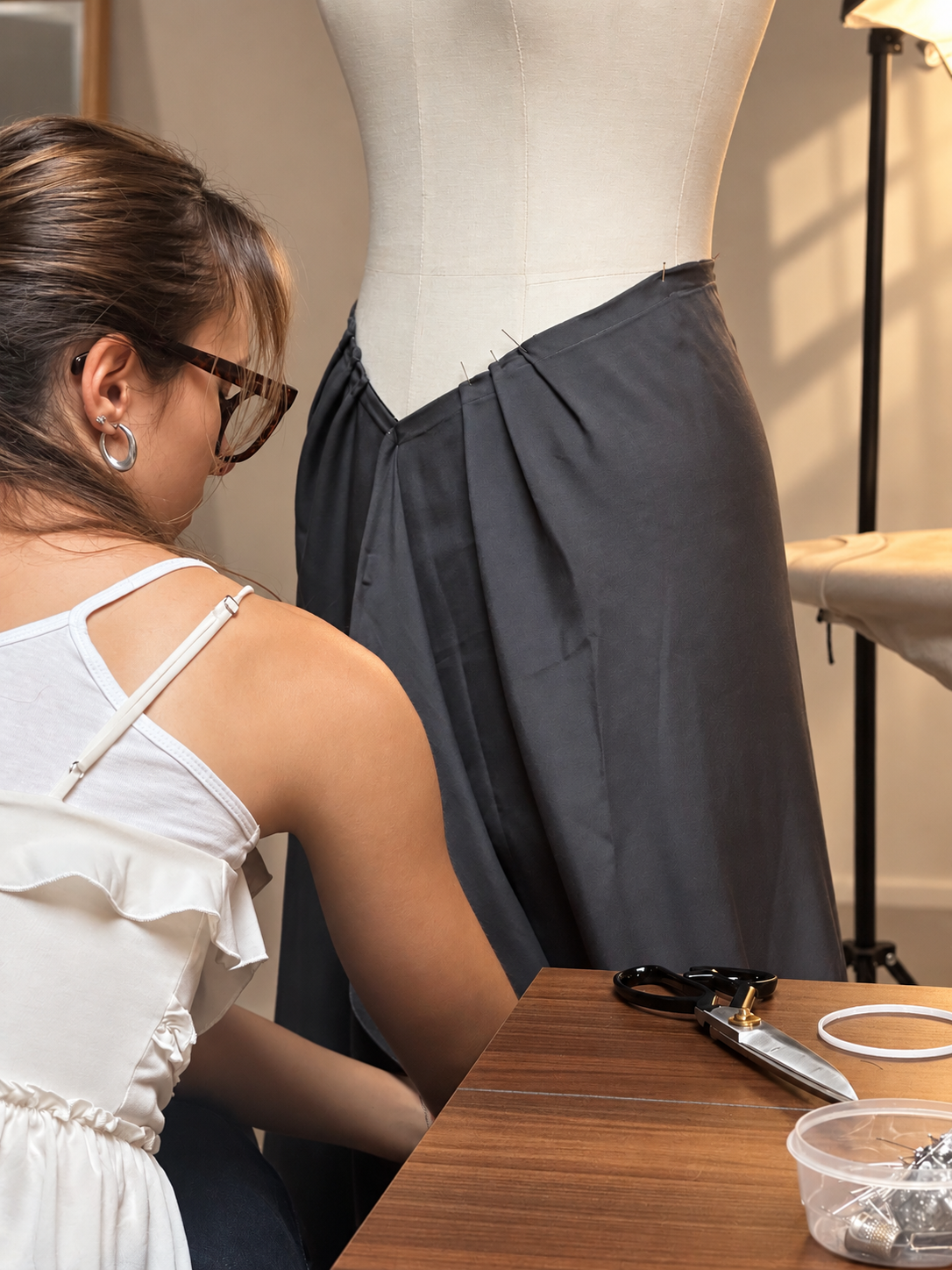
The work on drape begins on the dress form, through the adjustment of pleats and volume.
A jacket can define a shoulder while leaving room for a gesture. Collections presented in September 2026 for Spring/Summer 2027 bring that balance into focus. When choosing a fluid suit, the interesting question is where to place structure, and where to allow freedom.
The moment often comes before leaving home. Standing in front of the mirror, the jacket looks right. Then you reach for a bag, sit down or extend your arms. The garment reveals a second reality, less photogenic but essential: how it accompanies an ordinary day.
September’s presentations offer two perspectives. At Giorgio Armani, Who What Wear’s report of 27 September 2026 describes defined shoulders alongside fluid tailoring. At Theory, Vogue’s review of 16 September discusses skirt suits with 1980s references, conceived with urban life in mind. These collections concern Spring 2027, but the questions they raise are useful now.
A softer silhouette can still have character
Fluidity is about more than the width of a trouser leg. It also concerns how a jacket shifts, how a lapel rests and how fabric settles after movement. A loose garment can feel rigid; a line closer to the body can still offer ease.
It helps to separate three decisions: the shape of the shoulder, how closely the jacket follows the torso, and the volume below. A pronounced shoulder can work with a less fitted waist. Generous trousers can accompany a shorter jacket. Each combination creates a different silhouette, without suggesting one universal formula.
Our reading of these collections is that they allow more freedom in composition. Rather than choosing a wholly strict or wholly relaxed silhouette, you can decide where the garment makes its strongest statement. That might be at the shoulder, in the length of the jacket or along the uninterrupted line of the trousers.
Test comfort in a real situation
Standing still during a fitting tells only part of the story. Reach forward as though holding a steering wheel, sit at a table and walk a few steps. These movements reveal information that a front-facing pose cannot. Localised tension, an uncomfortable waistband or a sleeve that restricts a gesture are worth mentioning.
It also matters what you intend to wear underneath. A fine top and a shirt take up different amounts of room; knitwear adds another layer. Trying the jacket with just one ideal combination leaves part of the project unexplored if you hope to wear it in several ways.
The same applies to shoes. Trouser length should be assessed with the footwear you will actually use. If you regularly alternate between flats and heels, discuss that at the outset. The aim is to choose a considered compromise, understanding both its possibilities and its limits.
Build the outfit around one kind of movement
A useful starting point is to choose the principal movement in the outfit. It might be trousers that follow your stride, a jacket with freely moving fronts or a soft top that changes the feel of a more structured ensemble. The rest of the outfit can support that intention.
Imagine a wide-legged suit for a day of appointments. A top without excess volume keeps the torso visually clear; stable shoes suit the day’s pace. For dinner, a different neckline or a piece of jewellery can shift the emphasis. There is no need to change every element.
A particularly expressive jacket may benefit from simpler surroundings. Looking at the complete outfit from a little distance helps establish what catches the eye first. If every element asks for equal attention, removing one accessory may be enough to recover the original intention.
What this brings to bespoke creation
Sandra Loï describes a process involving design development, sketches, a toile and fittings. This progression allows proportions to be examined before the finished garment. It also gives a practical framework to a wish that can be difficult to express: wanting a defined presence while keeping a sense of ease. The stages are set out in the bespoke experience.
To prepare for that conversation, personal observations are often more useful than a large collection of images. Which jacket do you happily wear all day? When do you invariably take yours off? Do you enjoy a defined waist, or prefer more freedom through the torso? Such answers give a project more direction than a general wish to look contemporary.
You can also bring one reference you like and another that feels wrong for you. Explaining the difference helps distinguish an attraction to a proportion from an attraction to a photograph. The cut you are looking for often becomes clearer through that comparison.
Keep the freedom, choose the line
The 2027 collections offer possibilities without determining the ideal width of a shoulder or a trouser leg. Their value lies in showing different ways to combine shape and movement. The choice is then yours, guided by daily life and how you wish to see yourself.
A convincing suit continues to work when you stop posing. It is in an ordinary gesture that its character becomes personal.
Explore bespoke creation at Sandra Loï and the questions that can shape your own project.
Sources
Who What Wear : Giorgio Armani Spring/Summer 2027 : 27 September 2026.
Vogue : Theory Spring 2027, Hannah Jackson : 16 September 2026.