
The women’s suit: choosing how to dress for your working day
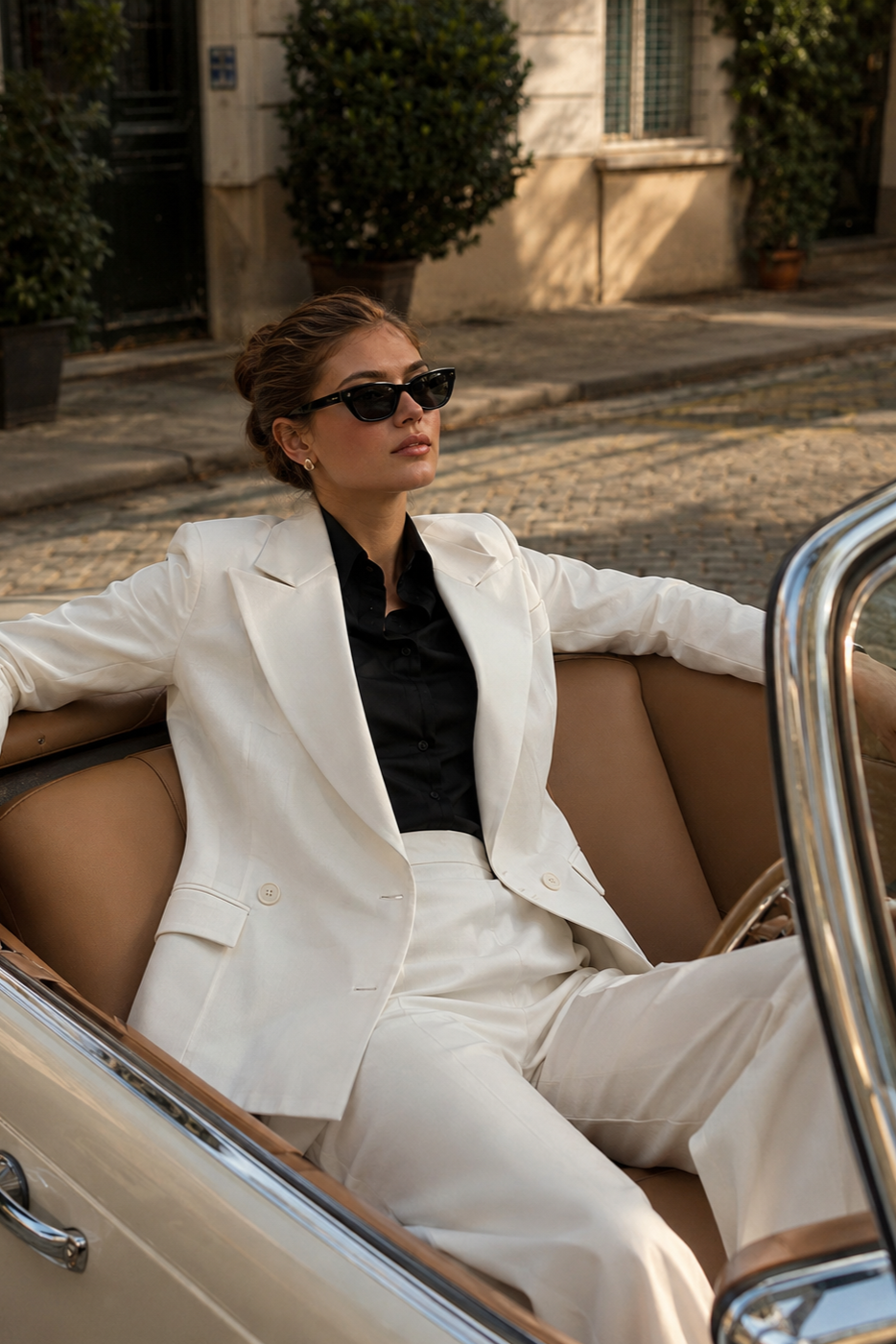
A working day can include a commute, hours at a desk, a presentation and dinner. Choosing a suit for these situations means organising an outfit around real uses. Cut and cloth contribute to the impression it creates, but clothing cannot replace ability or a person’s voice. Its most useful role may be to let you concentrate on what you are there to do.
Start with the most representative day
When planning a professional suit, begin with a typical day rather than a photograph of an exceptional occasion. How long do you spend sitting? Do you keep your jacket on in meetings? Do you walk between appointments or carry a computer? These details distinguish a silhouette designed for a brief appearance from an outfit expected to accompany you for several hours.
The required degree of formality also depends on context. Some meetings call for a carefully composed outfit; others leave more room for interpretation. You know those expectations better than a general style rule can. Explaining them during a commission allows the shoulder, colour and opening of a jacket to be considered with a specific purpose in mind.
If your work includes very different situations, identify the one that should guide the project. Expecting a single suit to answer a conference, journey and informal day in exactly the same way can lead to unsatisfying compromises. A clear priority leaves room for variation without requiring the garment to be universal or equally suited to every possible occasion.
Look at the jacket while seated too
Standing posture tells only part of the story. During a fitting, sit as you would at a table and bring your arms forward. Notice the collar, the position of the front and whether the sleeves allow the intended gesture. A jacket may be designed to remain open in some situations; it is helpful to choose this through observation rather than discover it as a limitation.
The layer underneath changes the sensation as well. A fine blouse and a thicker knit do not occupy the same space. If the jacket will serve across seasons, mention the layers you actually expect to wear. It need not accommodate every possible thickness, but the cut can be discussed in relation to the combinations that matter to you.
Sleeve length should be considered through those habits too. A pronounced sleeve may interfere with certain desk movements, while another length looks different with the arms extended. The mirror should therefore not be the fitting’s only guide. Your way of working brings information that is essential to judging the balance of the final garment.
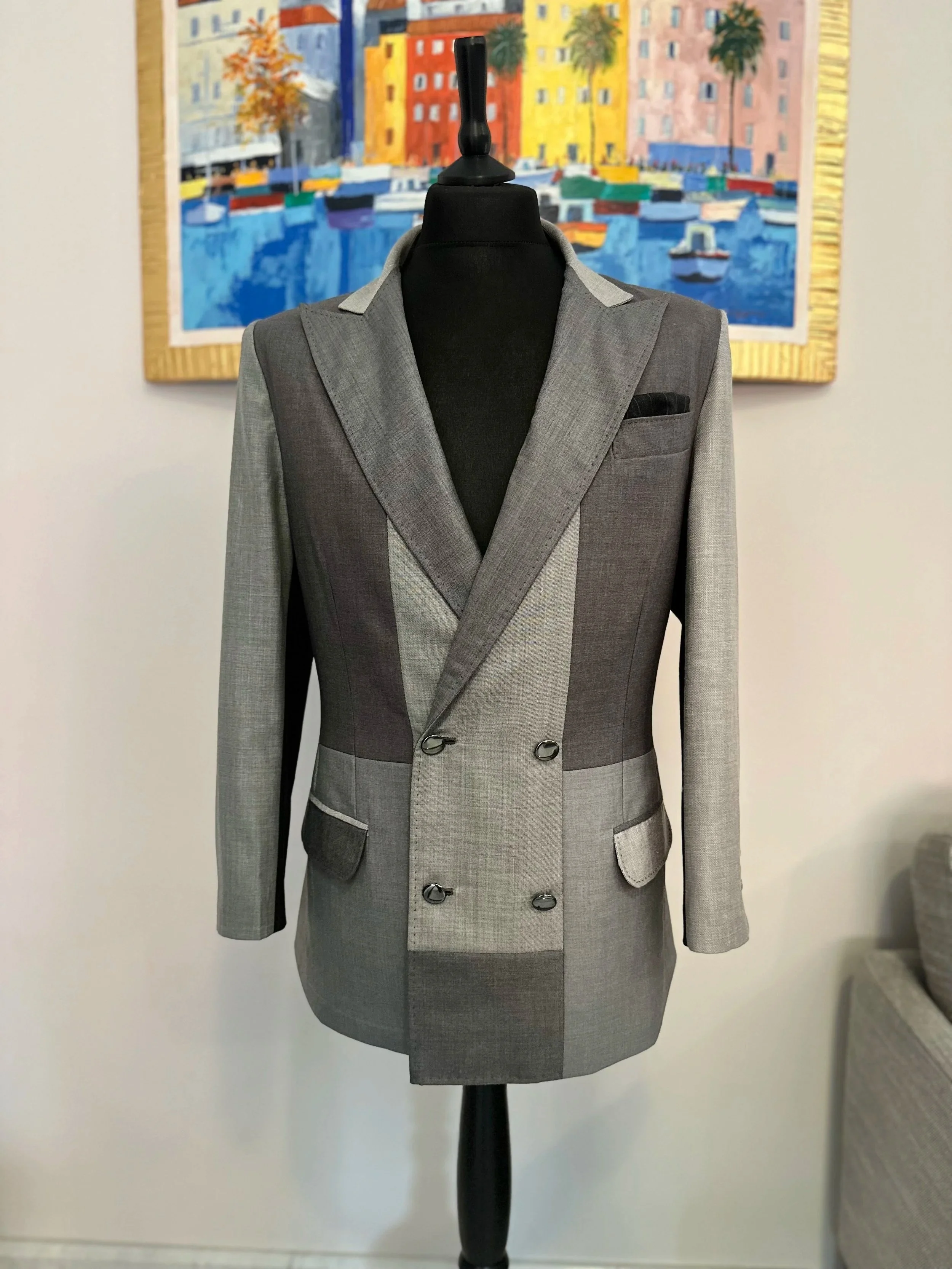
A Sandra Loï jacket: considering shoulders, lapels and length before composing the outfit.
Trousers, skirts and shoes belong to one decision
The lower half depends on preference as well as cut. With trousers, check the waistband while seated and the placement of the hem. With a skirt, examine stride and comfort when sitting. Neither is automatically more practical. The answer depends on construction and on how you intend to use the garment throughout the day.
Include your planned shoes in that assessment. If you commute in flats before changing at the office, explain this. The trousers may meet the two pairs differently. The conversation can then address a compromise in length or a priority use, instead of promising the same result with every shoe. It is easier to discuss these differences before the hem is finalised.
Think about pockets and your bag as well. Using a pocket for a phone can alter the line of a jacket or trousers. If you prefer to keep everything in a bag, your requirements will be different. A functional detail deserves attention during design, when its shape and position can still be considered as part of the project.
Decide how much individuality you want to show
A professional suit can remain restrained while carrying a recognisable detail. It can also embrace colour or a more visible composition. The question is how present you want it to feel in your setting, without assuming that understatement is always more credible or that an expressive outfit necessarily distracts from what you have to say.
Patchwork, a signature of Sandra Loï’s tailoring, opens a conversation about that balance. Looking at the arrangement of fragments, stripes and contrasts helps identify what belongs in your own wardrobe. A collection reference then provides language for a preference, rather than imposing the same visual effect on every personal commission or professional context.
Consider the outfit alongside accessories you already wear. Glasses, jewellery or shoes may have a strong presence of their own. The suit does not need to neutralise them; it needs to form a combination that feels right to you. That continuity can make a new garment easier to adopt and more likely to feel natural in daily use.
Prepare a wardrobe rather than a single image
If you hope to separate the jacket and lower half, imagine two or three specific combinations before confirming the design. The jacket may create a different proportion with another garment than with its original trousers. Exploring this early helps distinguish a realistic possibility from versatility that is merely hoped for and never tested against what you own.
To discuss a bespoke suit with Sandra Loï, bring the demands of your working day and the elements you want the outfit to retain. The objective can remain straightforward: a silhouette you recognise yourself in, with its practical behaviour considered. Taking your place then includes being able to wear the garment in your own way, without having to manage it at every movement.
Explore bespoke creation at Sandra Loï.