
The Journal.
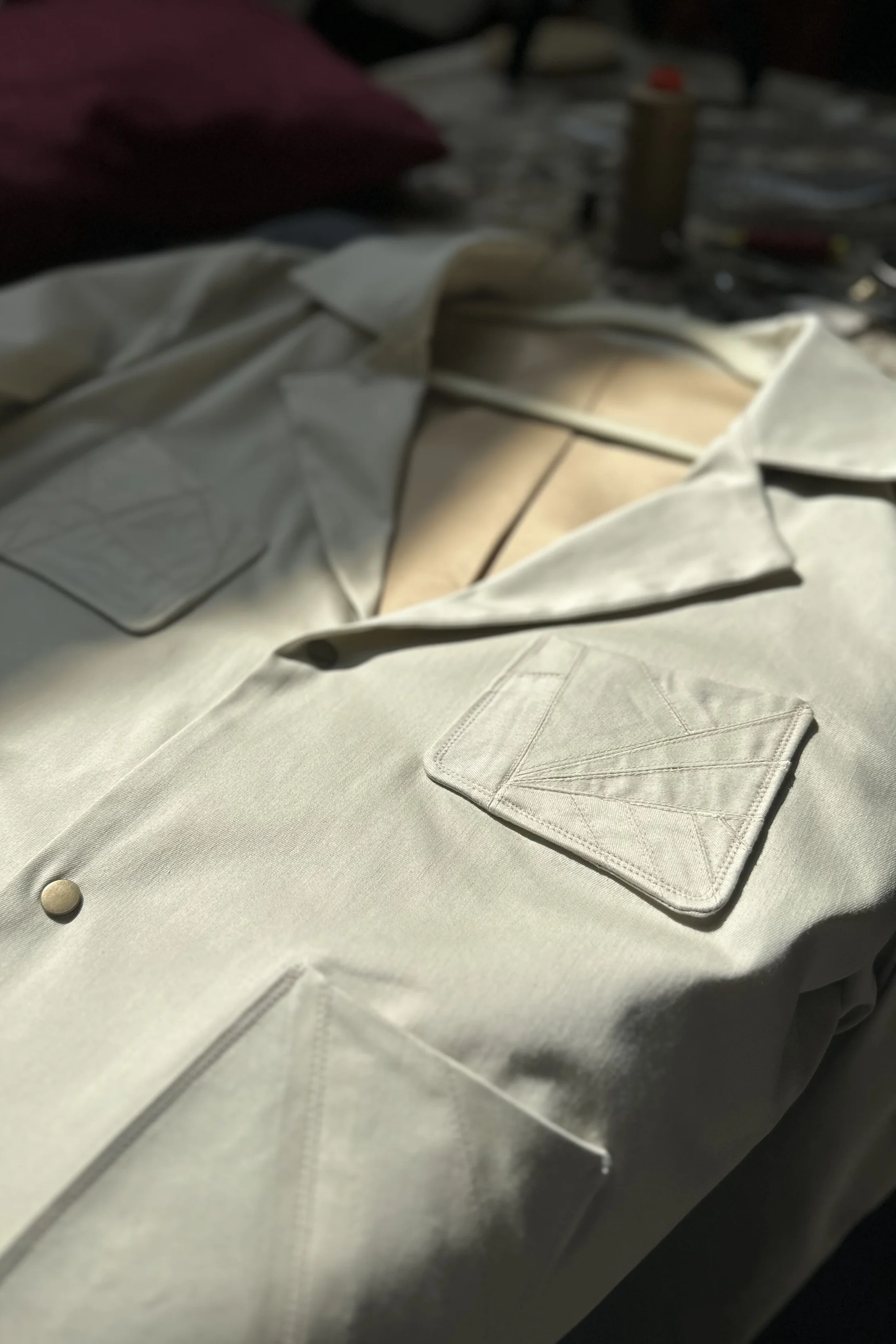
In its Journal, the Maison explores the history of women's tailoring, life behind the scenes at Sandra Loï, notes on style and the questions surrounding bespoke creation.
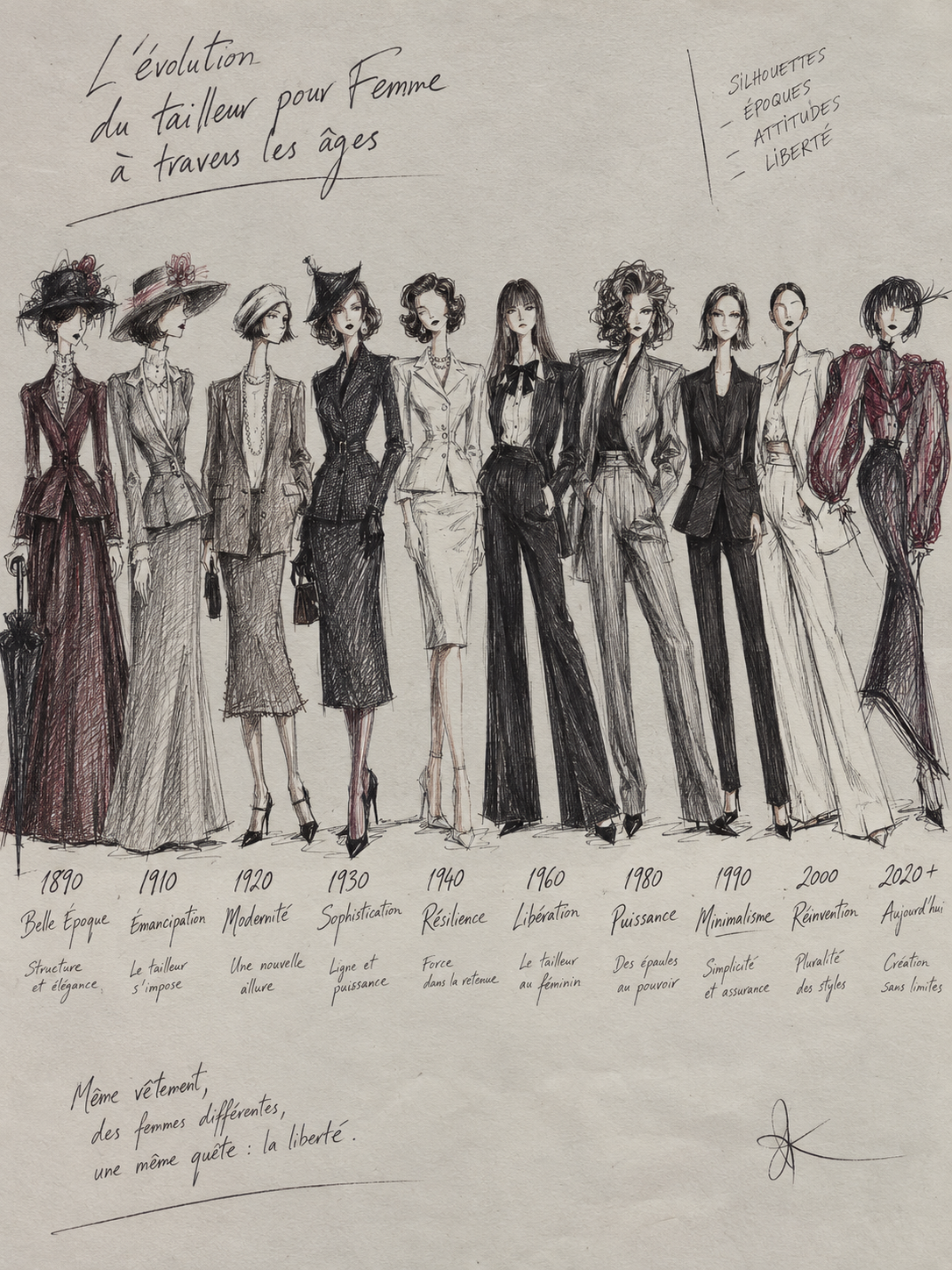
The history of the women’s suit: more than one route to freedom
Skirt suit, trouser suit, tuxedo: the women’s suit brings together silhouettes whose histories are not interchangeable. To understand the ensemble, we need to consider what it allows its wearer to do as well as how it looks. A few carefully chosen moments reveal its ability to change meaning while retaining a recognisable structure.
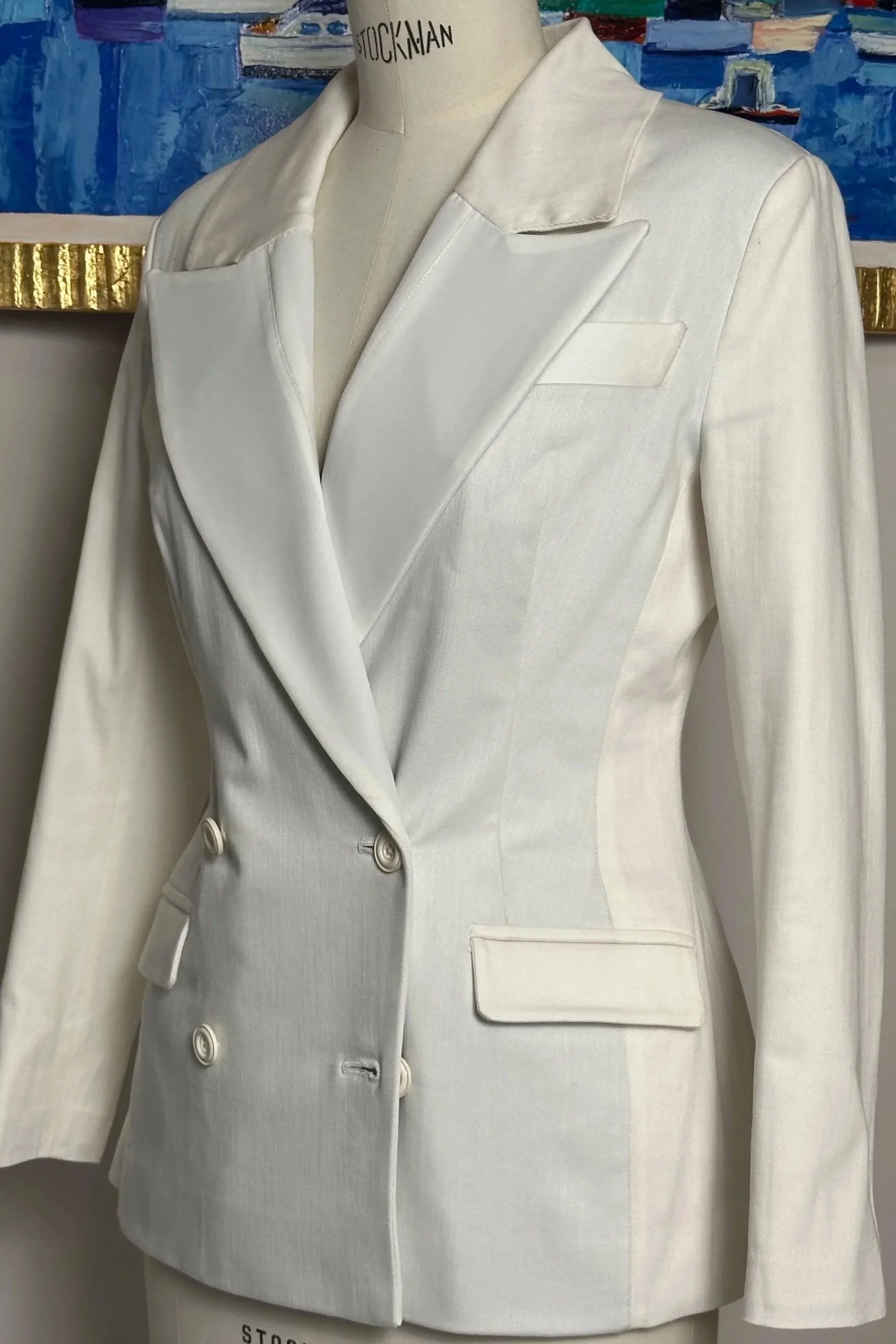
A bespoke suit: what makes a silhouette feel coherent
Sometimes we notice a suit before identifying its cloth or details. The proportions of its upper and lower halves, their fabric and the way the ensemble is worn seem to share one intention. That coherence does not come from a universal formula. It develops through connected decisions, then finds its test on the wearer, in her movements and in everyday life.
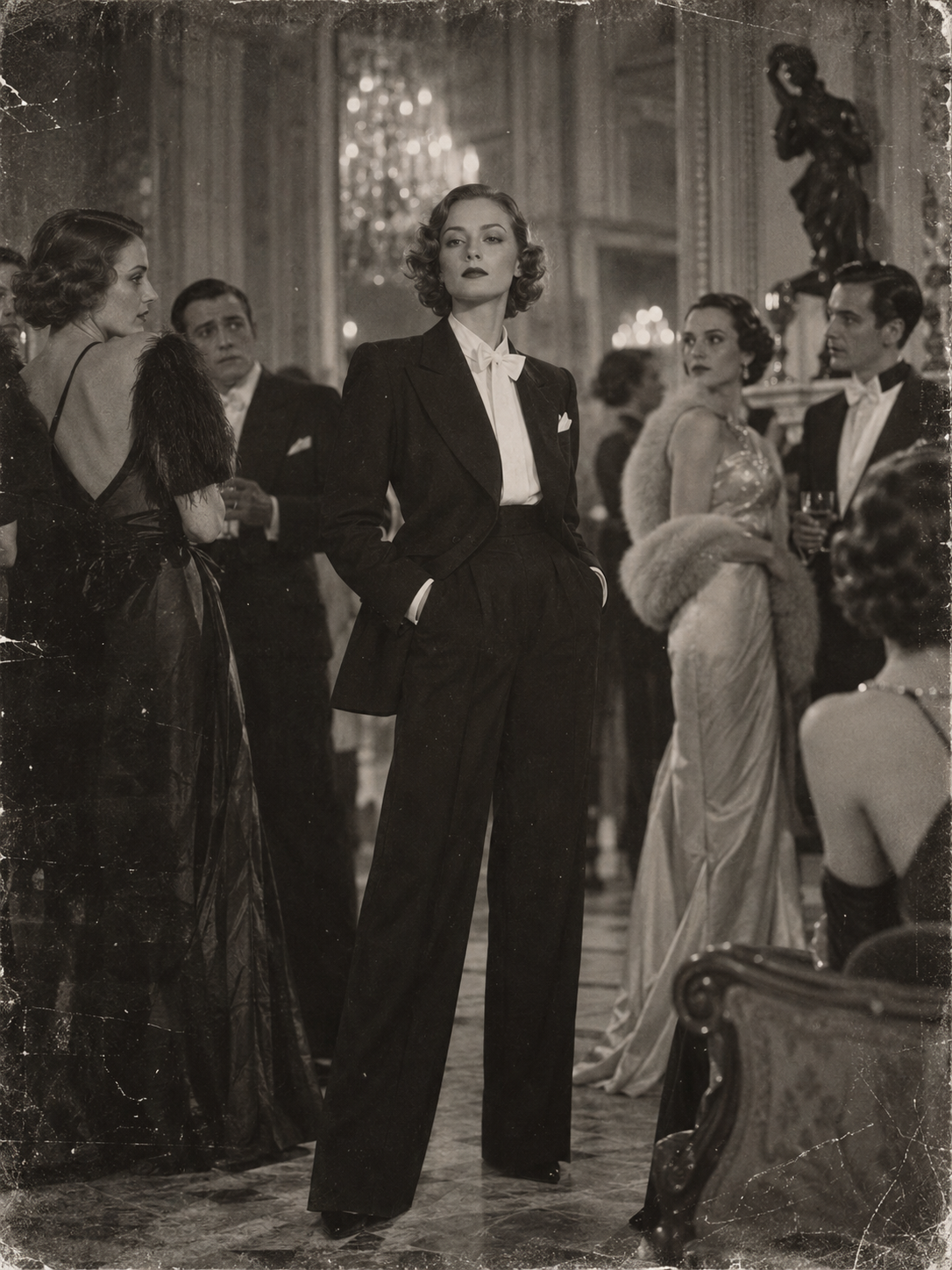
Why the women’s suit continues to shift dress codes
A suit can suggest work, ceremony, restraint or fantasy. Its meaning depends on its proportions, what accompanies it and how it is worn. The women’s suit remains interesting because it preserves recognisable signs while allowing them to move. Its appeal lies in that range of readings, rather than in a single intention to attract attention or refuse it.
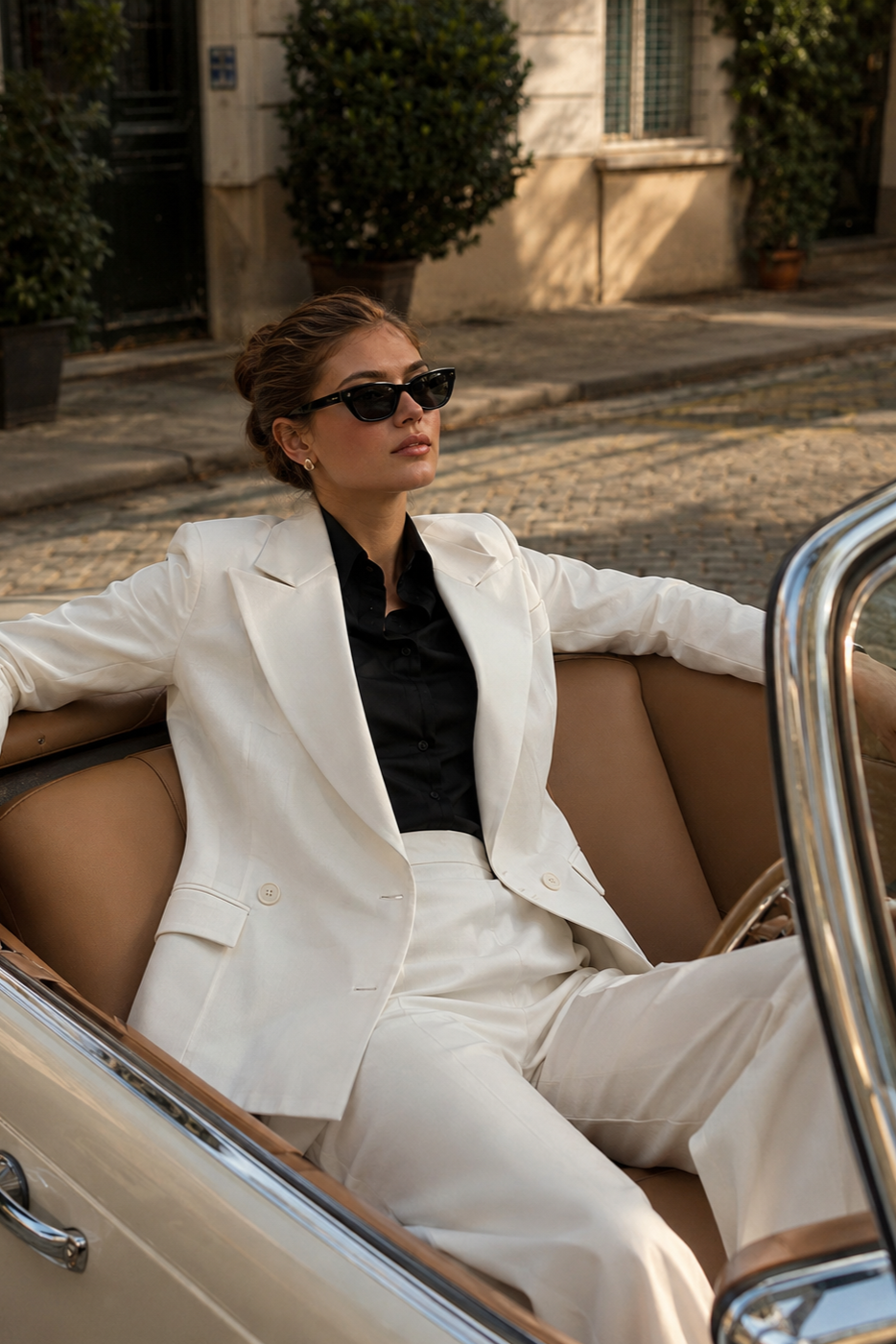
The women’s suit: choosing how to dress for your working day
A working day can include a commute, hours at a desk, a presentation and dinner. Choosing a suit for these situations means organising an outfit around real uses. Cut and cloth contribute to the impression it creates, but clothing cannot replace ability or a person’s voice. Its most useful role may be to let you concentrate on what you are there to do.