The drape of bespoke trousers: what to notice at a fitting
In a trouser suit, the drape of the lower half shapes much of the silhouette. Trousers follow a stride, fold when we sit, meet the shoe and settle again when we stand. Their drape depends on all these situations, as well as their line in a mirror. A fitting brings those observations together, seeking a balance between the suit’s intended design and the comfort the wearer actually feels.
First, define the trousers you want to wear
Before examining a crease, establish the silhouette you are aiming for. Wide trousers need to retain a certain amount of cloth; a closer cut will behave differently. Trying to remove every fold from the first could erase the original intention. Equally, tension does not become desirable simply because a fitted style has been chosen. Ease and design need to be considered together.
The position of the waist deserves its own discussion. It determines where the trousers rest and how they meet a top or jacket. Instead of asking only for a high waist, explain where you like to feel the waistband and what bothers you in your existing trousers. Those personal references can be more useful than a style name that different people interpret differently.
Bringing a pair you enjoy wearing may help. You do not necessarily need to reproduce it: you may like the width of its leg but want another waistband, or enjoy its length while needing more comfort when seated. A concrete example helps separate what already works from what the new project should address.
Observe the waistband without forgetting the rest
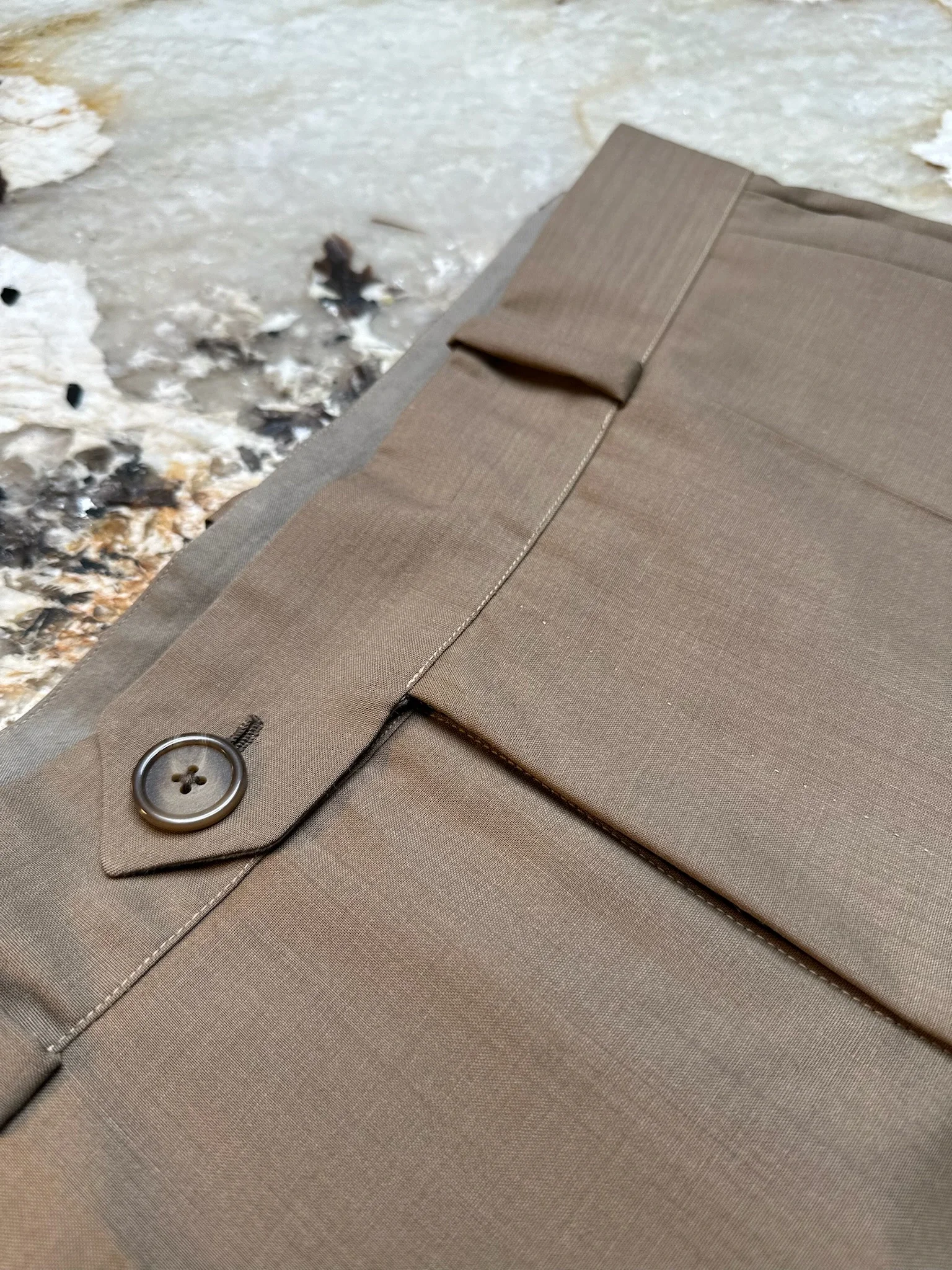
The waistband is a useful first reference, but it does not explain the whole fit. Standing, notice whether the trousers remain at the chosen height without needing to be pulled up. Seated, check how the waist and abdomen feel. A fastening that is comfortable when upright can become restrictive in another position. That is information to share during the fitting.
The hip and crotch area require the same attention. The curved section of the pattern connecting front and back between the legs affects how the trousers sit. Discomfort here is not necessarily solved by making the entire garment wider. Describe the sensation and the movement that causes it; the technical assessment belongs to the person adjusting the cut.
Pockets can reveal another part of the garment’s behaviour. Observe them empty, then consider any small objects you genuinely intend to carry in them. A phone, for example, adds weight and volume on one side. Deciding whether a pocket will be regularly used or mainly decorative can influence the design from the beginning, rather than becoming an afterthought.
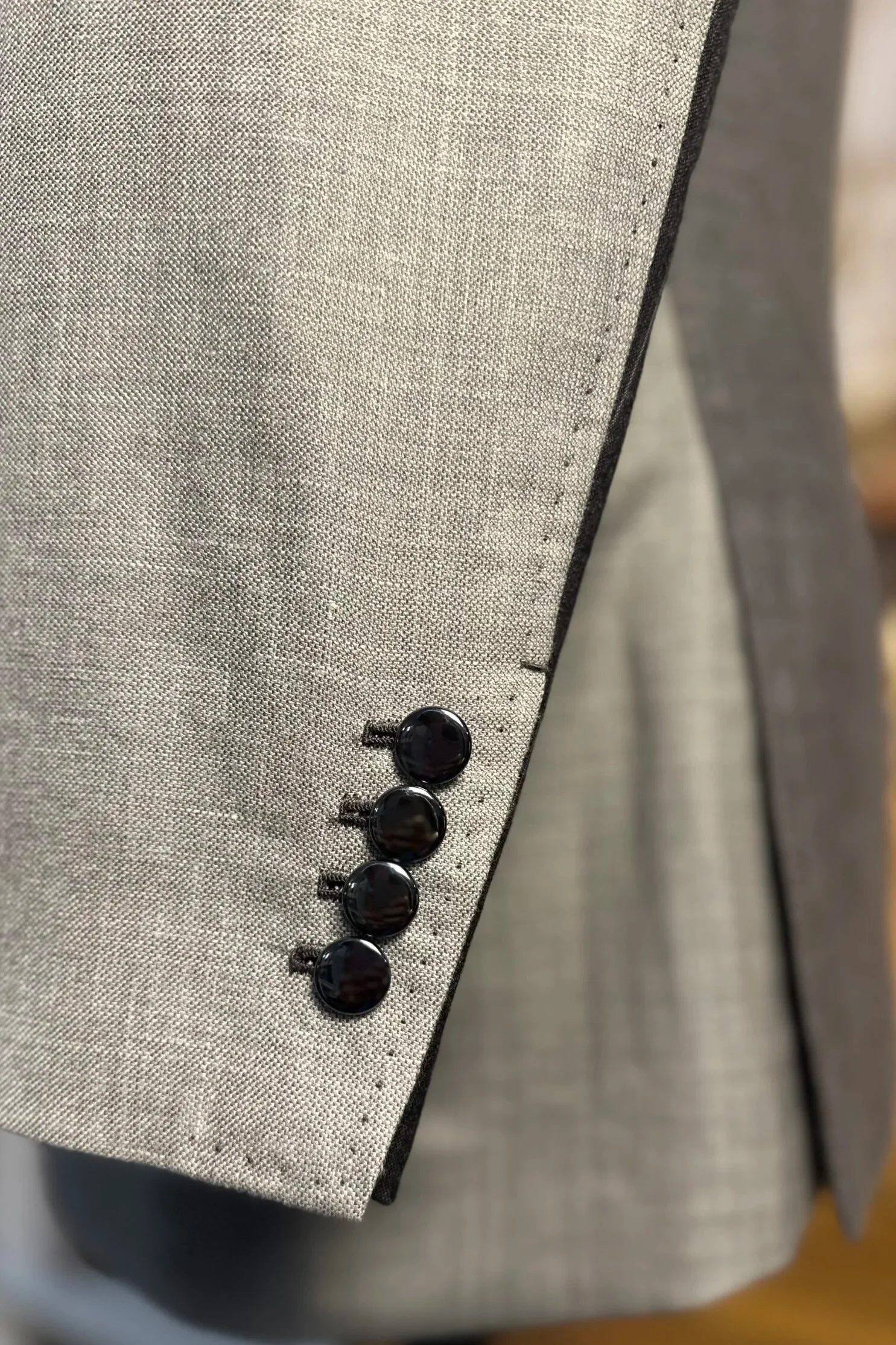
The texture of a fabric contributes to the reading of a garment, beyond its colour.
Not every fold means the same thing
Cloth naturally folds as the body moves. Expecting trousers to look identical while standing, sitting and walking would be unrealistic. More useful questions concern persistent lines when still, sensations of tension and the way the fabric settles again. Their interpretation depends on both the cut and the cloth, and should be made in the context of the whole garment.
Avoid pulling the fabric in several directions to create a briefly smooth image. This can hide the issue or shift the waistband. Stand as you usually do, without holding in your stomach or adopting an unusually upright pose. The trousers need to be assessed on the posture they will encounter once you leave the fitting, rather than on a position held for the mirror.
The material matters too. Weight, flexibility and surface influence how it falls down the leg. Two pairs designed with a similar intention may therefore move differently. If a photograph is your reference, ask whether the proposed fabric can create a comparable effect. The outline alone cannot guarantee the behaviour of the finished trousers.
Shoes are part of the length
A hem meets the shape of a shoe, not only the height of its heel. The upper, toe and sole affect where the cloth rests. Bring the intended pair, or one that is genuinely comparable, when the length is being assessed. An approximation can change the visible result at the bottom of the leg more than expected.
With wide trousers, check the back of the hem while walking as well as the front while still. A length that looks right from one angle may brush the ground from another. If you plan to wear both flats and heels, use the fitting to discuss the compromise. It is better to choose two different effects consciously than to expect one length to be identical in every situation.
The jacket or top should also be considered at the same time. Where its edge meets the trousers can emphasise or soften the perceived waist height. This relationship often tells you more about the ensemble than examining the trousers entirely on their own. A fitting becomes more informative when the intended outfit is present.
Make the fitting a precise conversation
A few movements can enrich the discussion: walk, sit, stand and take a higher step as if climbing a stair. Mention what you feel even when you like the reflection. Comfort is part of the intended result, not a concession to request only after every visual decision has been made.
Sandra Loï’s bespoke process includes a toile and fittings to refine volume and drape. To prepare a trouser commission, note the situations that challenge your current pairs and the shoes you intend to use. These details give the project a clearer direction than an abstract request for a perfect drape, and help turn the fitting into a useful exchange.
Explore bespoke creation at Sandra Loï.