A dress or a suit for a civil wedding: start with the day itself
Choosing a civil wedding outfit becomes easier when we stop opposing the romantic dress and the assertive suit. A dress can be graphic; tailoring can be soft and delicate. The meaningful differences emerge through volume, movement and how you want to experience the day. The choice concerns an experience as much as an image, and deserves to begin there.
Imagine the day before choosing the silhouette
Start by following the day in sequence: preparation, travel, ceremony, photographs, a meal and perhaps an evening celebration. A staircase, a walk through town or a long seated lunch may matter more to the outfit than an inspiration board. Naming these moments helps identify where ease is important and which movements should be tested during a fitting.
The setting and season have practical consequences too. A ceremony followed by lunch outdoors does not suggest the same layers as a day spent mainly inside. Rather than seeking a rule for each month, consider what you could add or remove. A jacket can serve this purpose, but a dress can equally be planned with a suitable accompanying piece.
It also helps to distinguish your own preference from what other people imagine. A few personal references, selected before gathering many opinions, can preserve a clear direction. You may want a highly ceremonial outfit or something closer to your usual wardrobe. A civil wedding does not require every bride to choose the same degree of formality or visual impact.
The dress: consider line and freedom of movement
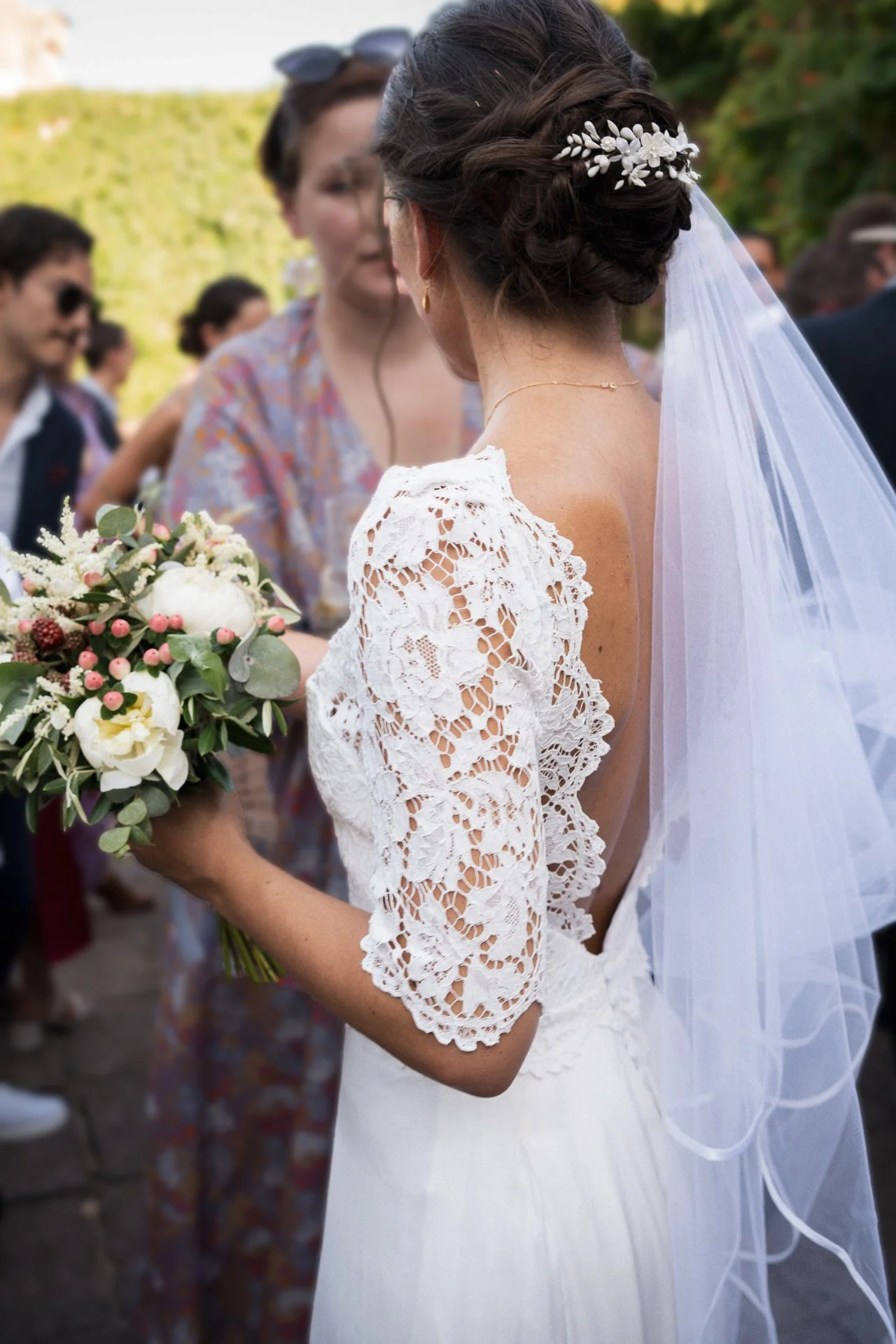
A dress brings the upper and lower body into one composition. Waist placement, length and neckline organise a continuous line. That line can be restrained or give considerable space to volume. It does not define the wearer’s personality or prescribe one way of expressing femininity. Those meanings remain hers to determine.
At a fitting, test walking and sitting. A full skirt requires different attention from a narrow one; a strapless bodice needs to feel secure during the intended gestures. Raising your arms to embrace someone, holding a bouquet or sitting at a table provides information that a photograph from the front cannot. These tests help the design relate to the day rather than only to the mirror.
Length should be checked with the chosen shoes. A dress close to the ground may need to be lifted for a step. Consider whether that gesture suits you, particularly if you hope to keep your hands free. A successful outfit does not necessarily remove every constraint; it makes the choices and their consequences clear before the occasion.
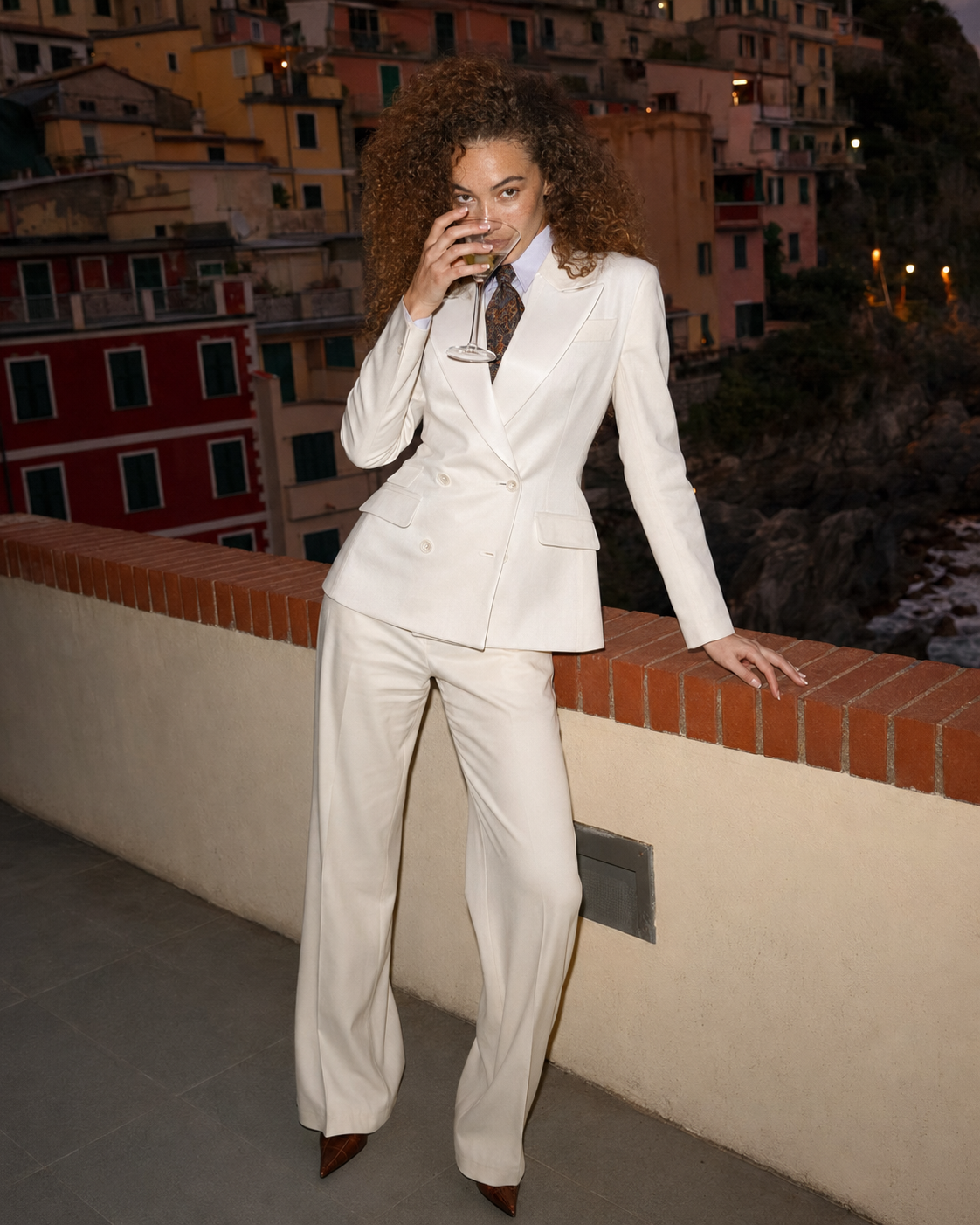
A white trouser suit: one silhouette to consider for a civil wedding.
The suit: think about the pieces together
A suit introduces several elements whose proportions need to work in relation to one another. A cropped jacket meets trousers differently from a longer one. The layer beneath also matters, defining what is visible when the jacket opens or comes off. Consider the outfit in each of those situations from the beginning, especially if the day moves between indoor and outdoor settings.
Trousers can offer welcome amplitude, but that depends on their cut. Check the waistband when seated, ease through the hips and length with the intended shoes. An ensemble that looks relaxed in a photograph is not automatically comfortable for every wearer. The fitting provides a better guide than a label such as suit or fluid tailoring.
If you hope to wear the pieces separately afterwards, imagine specific combinations. The jacket might work with trousers already in your wardrobe; the lower half with a favourite shirt or knit. This possibility can guide decisions without making versatility compulsory. A creation desired for one significant occasion can be a fully considered choice in its own right.
Choose colour and fabric as a pair
White, ivory or a stronger colour does not produce one fixed effect. The same shade changes with the surface of the cloth and the light. Look at samples near your face and alongside any accessories, rather than relying only on a screen image. Any transparency should also be assessed with the underwear intended for the finished outfit.
The fabric choice affects movement. Do you want a surface that keeps a defined line, cloth that follows your stride or a volume that remains present? These intentions make it easier to discuss suitable possibilities. They are more informative than asking for a luxurious fabric without describing how you want to wear it and what the garment should do.
In Le Vestiaire des Immortels, Pénélope combines a strapless cut with layers of ivory organza. It offers one exploration of volume and visual lightness. That creation can inform a conversation about shape without becoming a required model for a civil ceremony or implying availability for a particular commission. A reference is most useful when it opens possibilities.
Prepare the meeting without fixing every answer
Bring the event date, the outline of the day, your shoes if already chosen and a few references with notes. Mention anything you do not want to monitor constantly: a neckline, hem, sleeve or insistent waistband. These limits are as useful as your wishes in helping to shape the project and identify what will make you comfortable.
The dress-or-suit decision can remain open at the start. Sandra Loï’s bespoke process provides a setting in which to discuss a line and examine it through the stages of creation. Explore the Maison’s special commissions and begin with your day. The outfit can find its form more naturally once it is clear what you want to experience while wearing it.
Explore bespoke creation at Sandra Loï.