
Why the women’s suit continues to shift dress codes
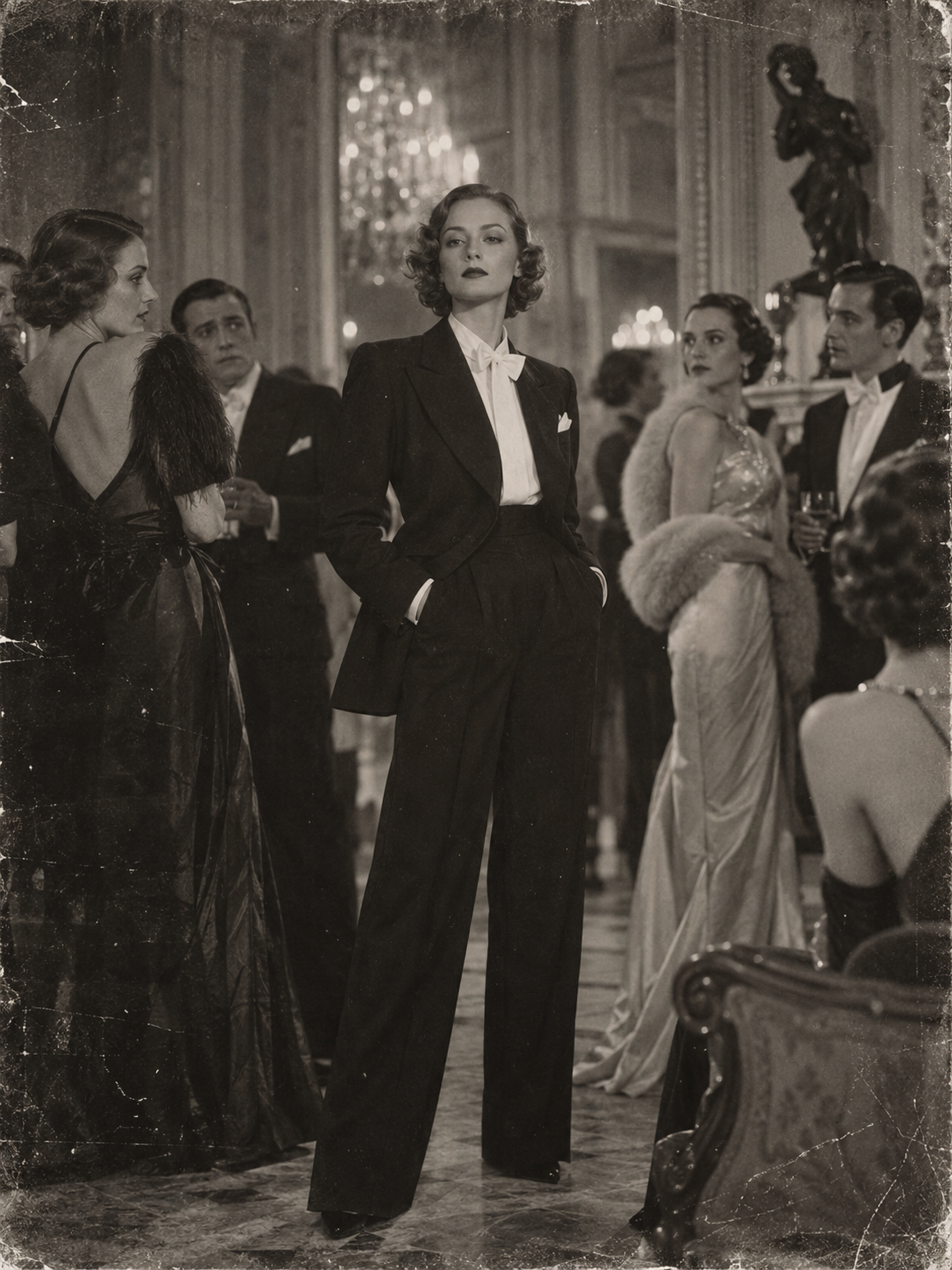
A suit can suggest work, ceremony, restraint or fantasy. Its meaning depends on its proportions, what accompanies it and how it is worn. The women’s suit remains interesting because it preserves recognisable signs while allowing them to move. Its appeal lies in that range of readings, rather than in a single intention to attract attention or refuse it.
A garment does not automatically reveal an intention
Describing a suit as a refusal to please may seem to give it particular strength. Yet the phrase places its wearer inside another expectation. A woman may choose a suit because she enjoys its cut, because it suits an occasion, for its sensuality or simply because it feels right. Those reasons can coexist without becoming a manifesto or requiring an explanation to anyone else.
The same care applies to an observer’s interpretation. An outfit one person sees as severe may feel reassuring to another, theatrical in one setting and understated in another. Colour, place, accessories and familiar conventions all affect its reception. Discussing dress codes means recognising those associations without assuming that every viewer or wearer shares them.
This distinction leaves more room for design. Once we stop asking a suit to prove confidence or independence, we can look more precisely at what appeals to us. A double-breasted fastening, a pronounced shoulder or wide trousers become choices of silhouette before they are treated as evidence of a particular personality or attitude.
The tuxedo as an example of changing context
Yves Saint Laurent’s women’s tuxedo, introduced in 1966, provides a clear reference. The Paris museum’s historical exhibition Smoking Forever traced its reinterpretations through to 2002. A garment could retain a recognisable identity while changing form across collections. A dress code, in other words, does not have to remain a fixed shape to stay legible.
What matters here is the possibility of reorganising evening dress around a jacket and trousers. Contrasts between surfaces, the opening at the neck and the presence of a shirt become ways to shape the image. This is more than replacing one garment with another: it redistributes attention across the body and makes different combinations possible.
That logic remains useful when looking at a contemporary suit. It can evoke something familiar and shift the reading through one decision. An unexpected fabric changes a restrained cut; a fuller lower half alters its relationship with a jacket; an ornamented surface introduces a different response to light. Transformation does not always require many competing details.
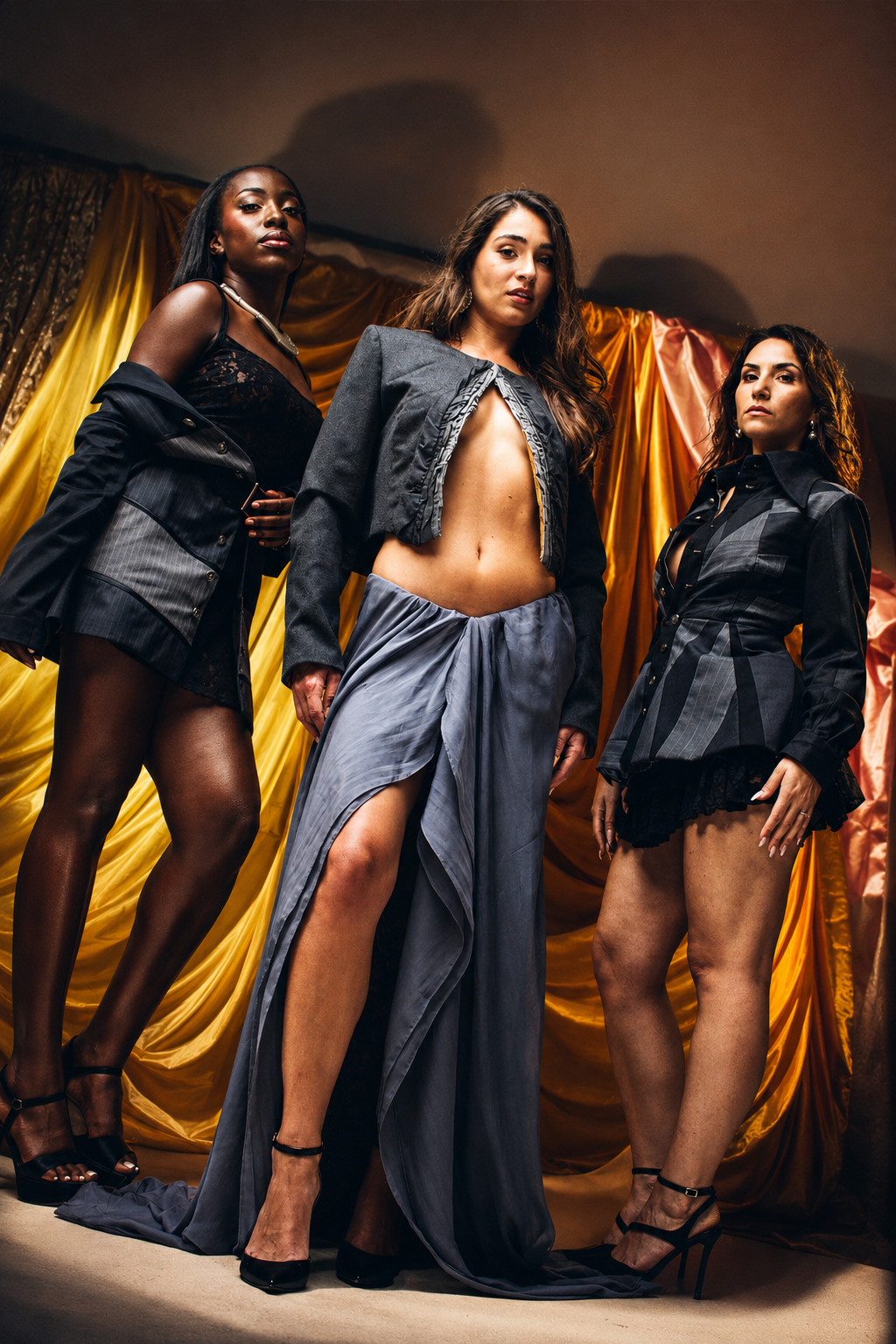
Three silhouettes, three ways to explore the proportions of the women’s suit.
Ornament and authority need not be opposites
Automatically opposing decorative dress to an assertive silhouette preserves the boundary it appears to challenge. A floral suit can be rigorously constructed. A black ensemble can be sensual. Precision of cut and richness of surface may operate as two dimensions of the same creation, rather than cancelling each other out or demanding a choice between them.
Sandra Loï’s Vestiaire des Immortels offers several ways to consider this relationship. Narcisse combines blue patchwork with luminous details. The Gaïa suit concentrates volume around its cropped, double-breasted upper half. The pieces retain elements we recognise within tailoring while giving textile composition and relief a visible role. Construction and ornament remain in conversation within the same silhouette.
This does not mean that the creations convey an identical message to every wearer. They show that one family of garments can accommodate different intensities. A client might respond to a defined line, a play of textures or a particular proportion without adopting every association surrounding a collection photograph. A personal commission can begin with one aspect of an image.
Context changes the reading
Imagine the same suit at a meeting, dinner and ceremony. The top worn underneath, jewellery and shoes can alter its register. A shirt fastened to the collar directs attention differently from an open neckline; a substantial shoe ends the silhouette differently from a fine sandal. Neither option is inherently more feminine, serious or legitimate than the other.
When building an outfit, it can help to decide first how formal you want it to feel. Then choose where to introduce freedom through colour, jewellery, volume or a way of wearing the jacket. This approach prevents each accessory from becoming an isolated decision. It can also explain why an appealing photograph feels distant from your own style once recreated.
Comfort has a part in that reading. Constantly adjusting a lapel or checking a fastening changes the experience of an outfit. Making a garment your own therefore involves ordinary gestures as well as cultural associations. Being able to forget a detail that previously bothered you can matter more than any broad claim about the power of a suit.
Choose the signs that make sense to you
In a bespoke project, talking about the desired impression can open a useful discussion, provided it leads to observable choices. Wanting an outfit that feels present yet easy to wear might suggest work on colour, amplitude or fabric contrast. Considering these decisions together gives the piece a clearer direction than attaching a list of personality traits to it.
The suit continues to shift dress codes because it remains available for reinterpretation. Explore Sandra Loï’s silhouettes by looking at what each changes: a proportion, a surface or the relationship between the upper and lower body. That reading leaves space for your own response, without requiring the garment to explain in advance who you are or why you chose it.
Explore Le Vestiaire des Immortels.
Sources
Musée Yves Saint Laurent Paris : Smoking Forever : exhibition from 5 October 2005 to 23 April 2006.