
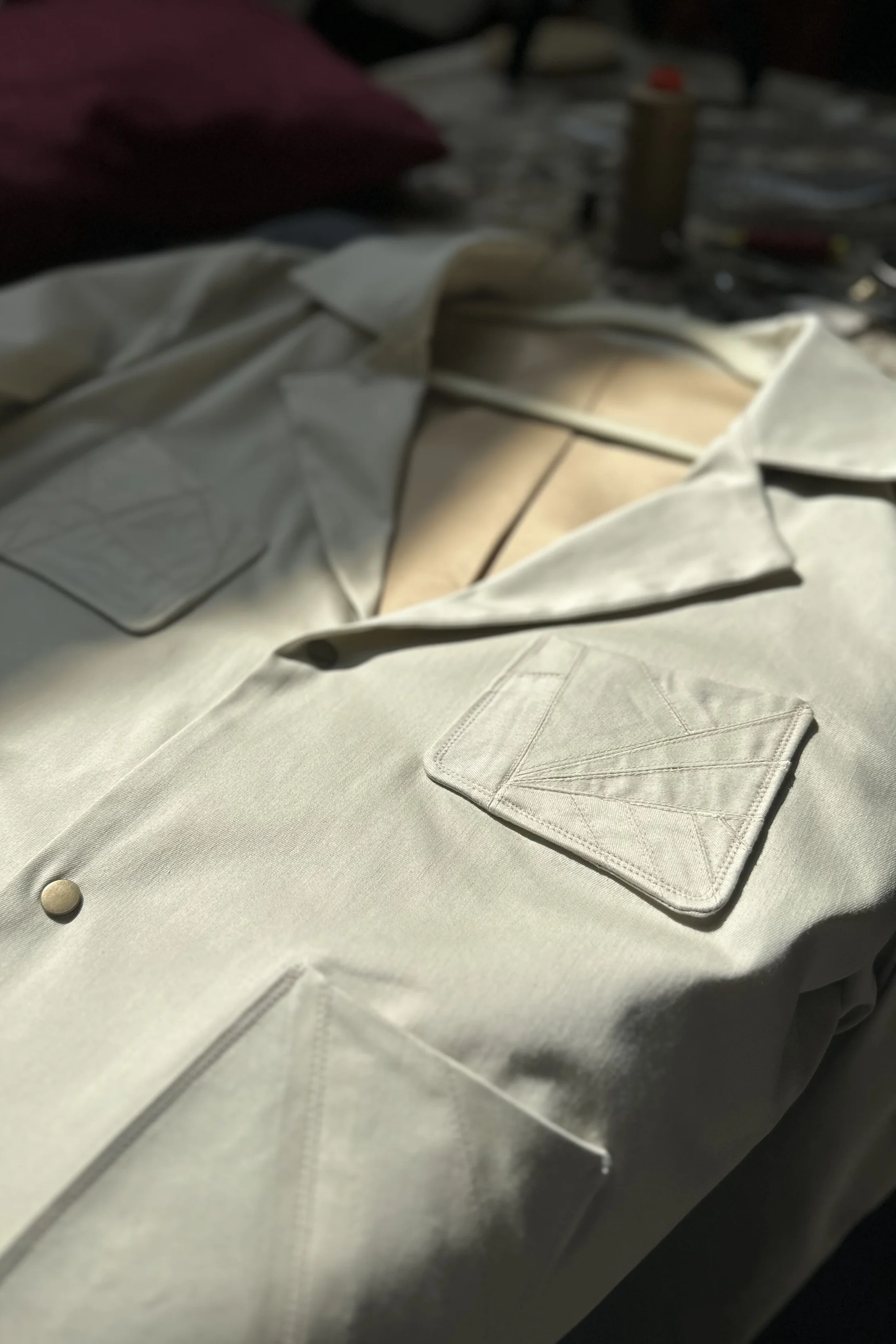
The Journal.
In its Journal, the Maison explores the history of women's tailoring, life behind the scenes at Sandra Loï, notes on style and the questions surrounding bespoke creation.
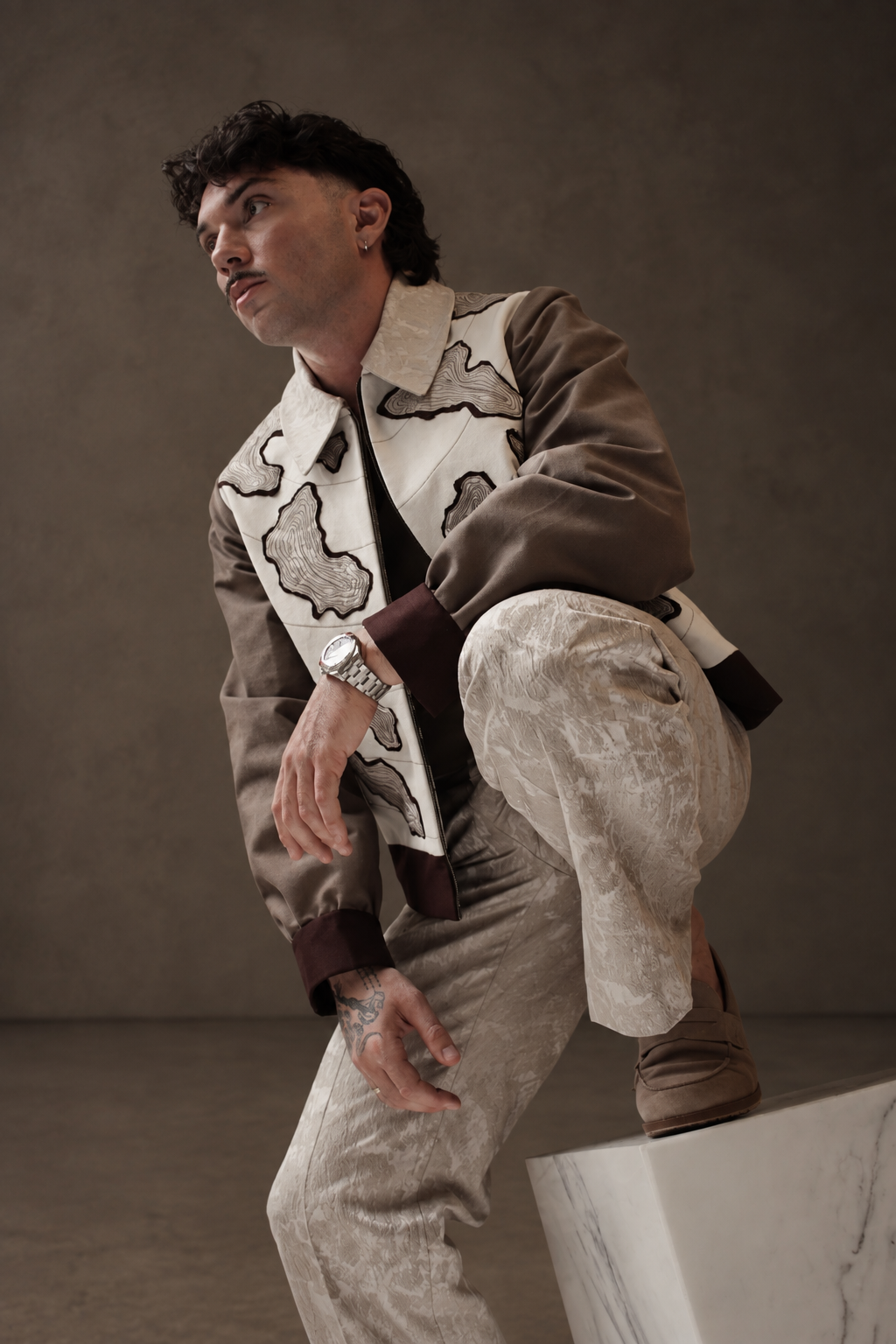
When clothing tells a story: from artwork to silhouette
How does an idea become a cut? “Costume Art”, presented at the Metropolitan Museum of Art in 2026, brings clothing and artworks into dialogue through the dressed body. It invites us to explore another translation: the passage from a story into material, proportion and movement.

Flowers, fabric feathers and relief: how to look at textile ornament
On a screen, we may see a flower without noticing the assembly that makes it possible. In Paris, the exhibition “Tisser, broder, sublimer” encourages a slower look. It offers a way to understand how textile ornament changes a surface, a movement and our perception of a silhouette.
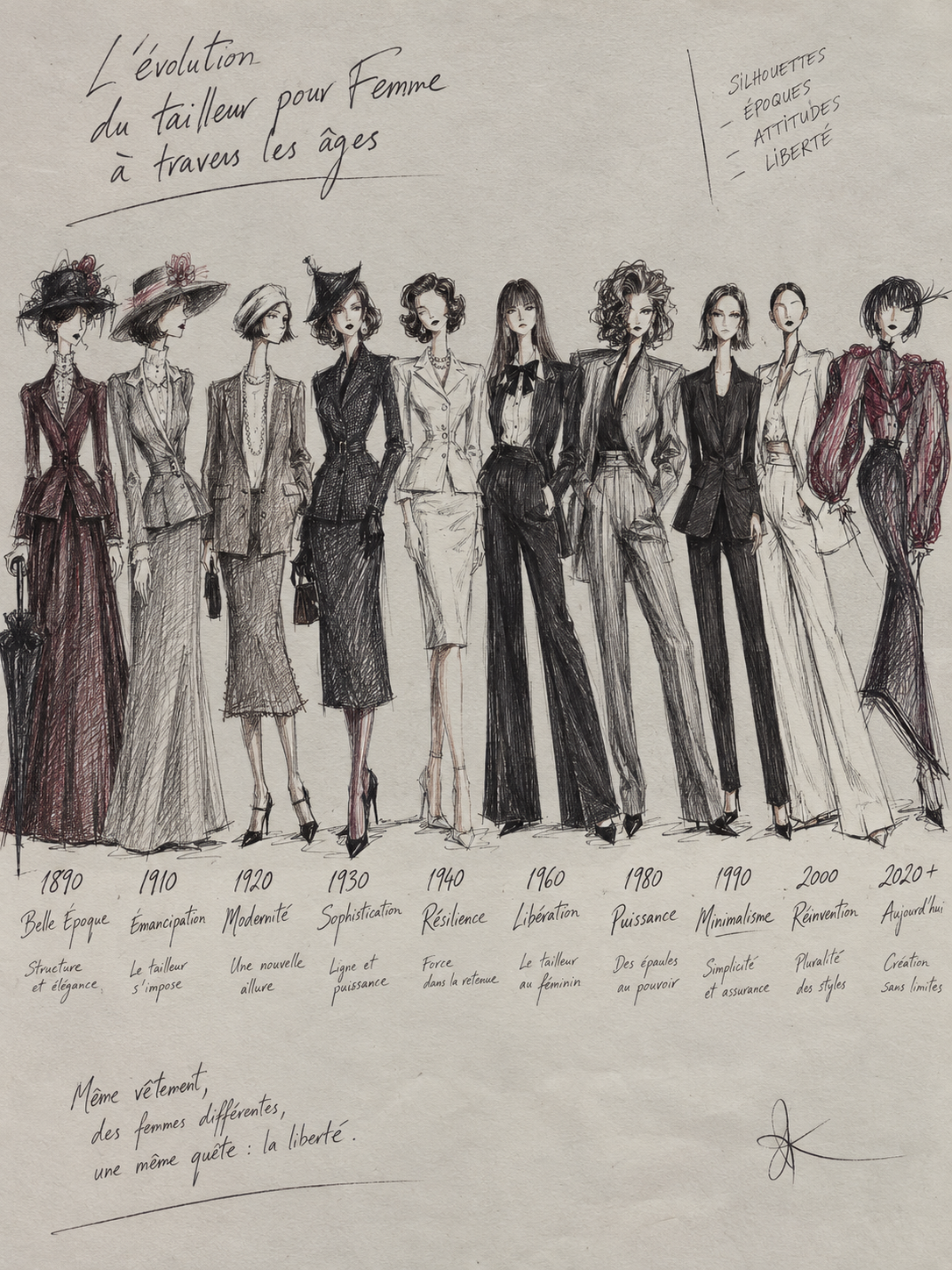
The history of the women’s suit: more than one route to freedom
Skirt suit, trouser suit, tuxedo: the women’s suit brings together silhouettes whose histories are not interchangeable. To understand the ensemble, we need to consider what it allows its wearer to do as well as how it looks. A few carefully chosen moments reveal its ability to change meaning while retaining a recognisable structure.
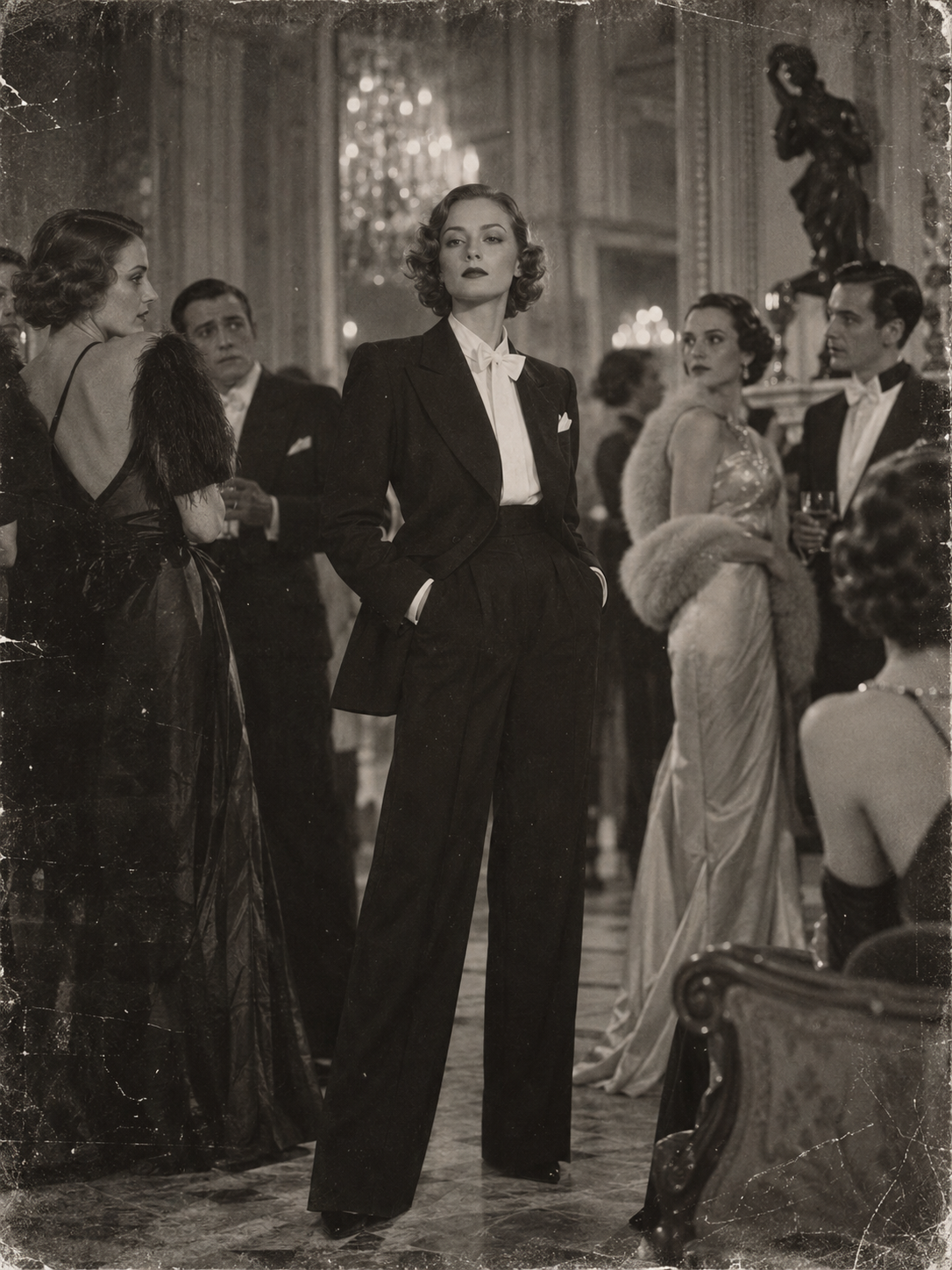
Why the women’s suit continues to shift dress codes
A suit can suggest work, ceremony, restraint or fantasy. Its meaning depends on its proportions, what accompanies it and how it is worn. The women’s suit remains interesting because it preserves recognisable signs while allowing them to move. Its appeal lies in that range of readings, rather than in a single intention to attract attention or refuse it.