The Journal.
Tailoring history, life behind the scenes at the Maison and a guide to bespoke.
It begins with cloth
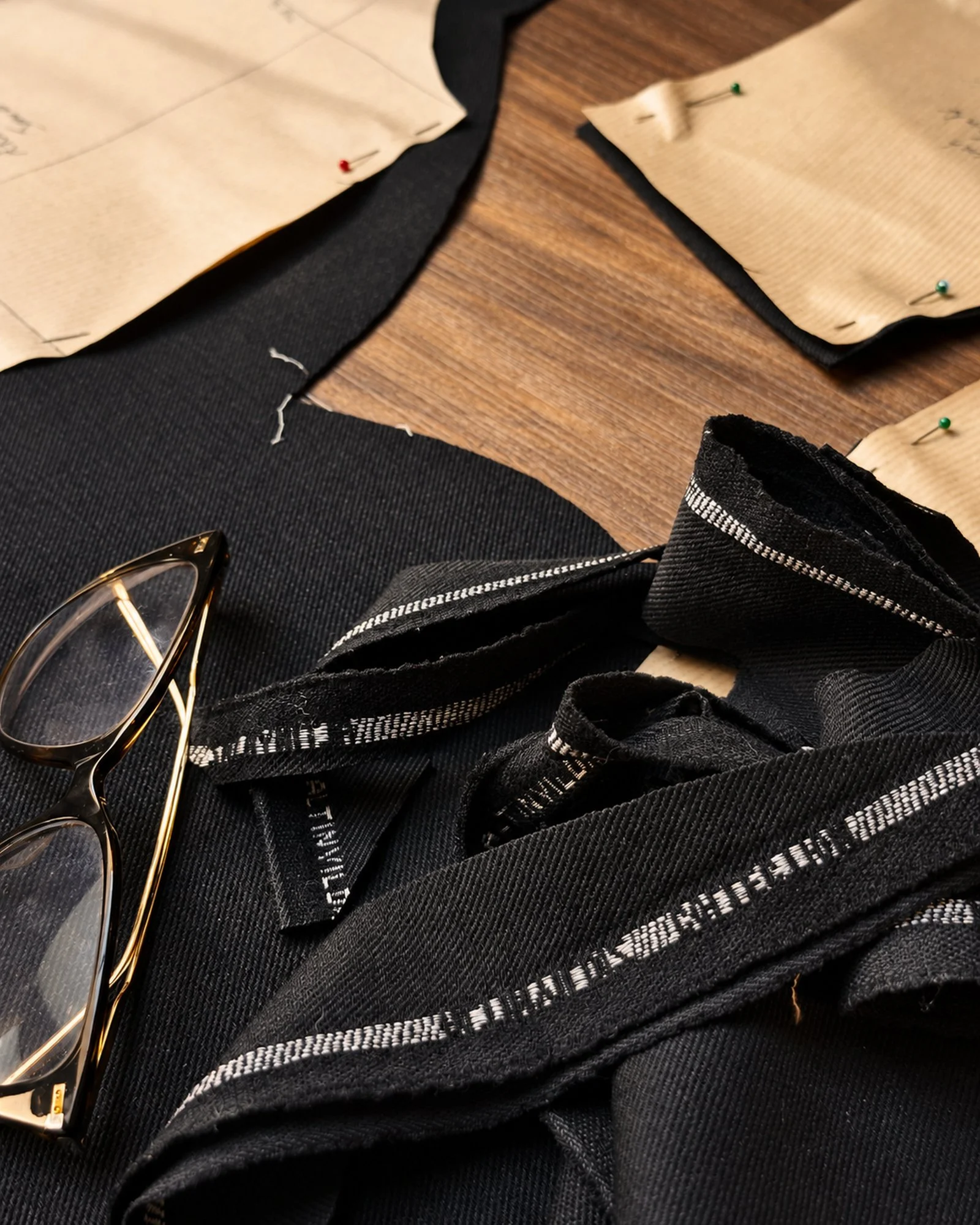
Drape, texture and construction guide the choice of a cloth. Discover how fabric gives a Sandra Loï suit its direction.

Flowers, fabric feathers and relief: how to look at textile ornament
On a screen, we may see a flower without noticing the assembly that makes it possible. In Paris, the exhibition “Tisser, broder, sublimer” encourages a slower look. It offers a way to understand how textile ornament changes a surface, a movement and our perception of a silhouette.

A different kind of suit: reading the language of patchwork
A stripe changes direction. Two neighbouring shades meet. A seam becomes part of the composition. Patchwork invites us to see clothing as a relationship between fragments. For tailoring, a particular focus at Sandra Loï, this opens a rich field of possibilities.

Gaïa: the couture suit, from atelier work to silhouette
The Gaïa suit is first understood as a silhouette: deep burgundy, a cropped upper half, a double-breasted front and balloon sleeves that relate to the line below. Within this ensemble from Le Vestiaire des Immortels, the jacket concentrates much of the work on volume and ornament. Atelier photographs connect the worn silhouette with its construction details. The 130 hours of creation recorded by the Maison gain a tangible context, without reducing the suit to a number.

The Principles of Bespoke Tailoring
A few millimetres can change the way a jacket collar meets the nape, a sleeve follows the arm or the front rests against the body. Bespoke tailoring works with these relationships.