The Journal.
In its Journal, the Maison explores the history of women's tailoring, life behind the scenes at Sandra Loï, notes on style and the questions surrounding bespoke creation.
A bespoke suit: what makes a silhouette feel coherent
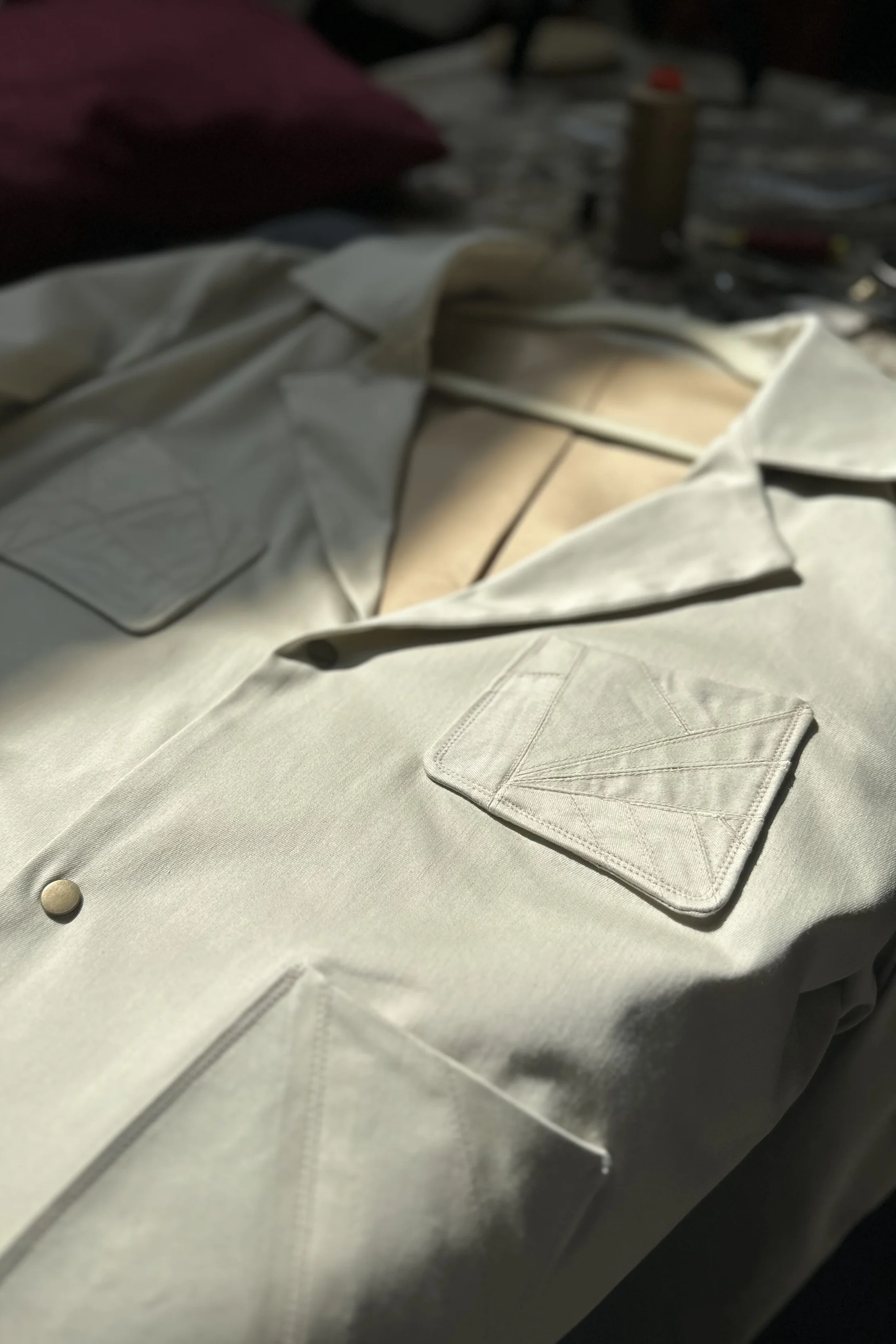
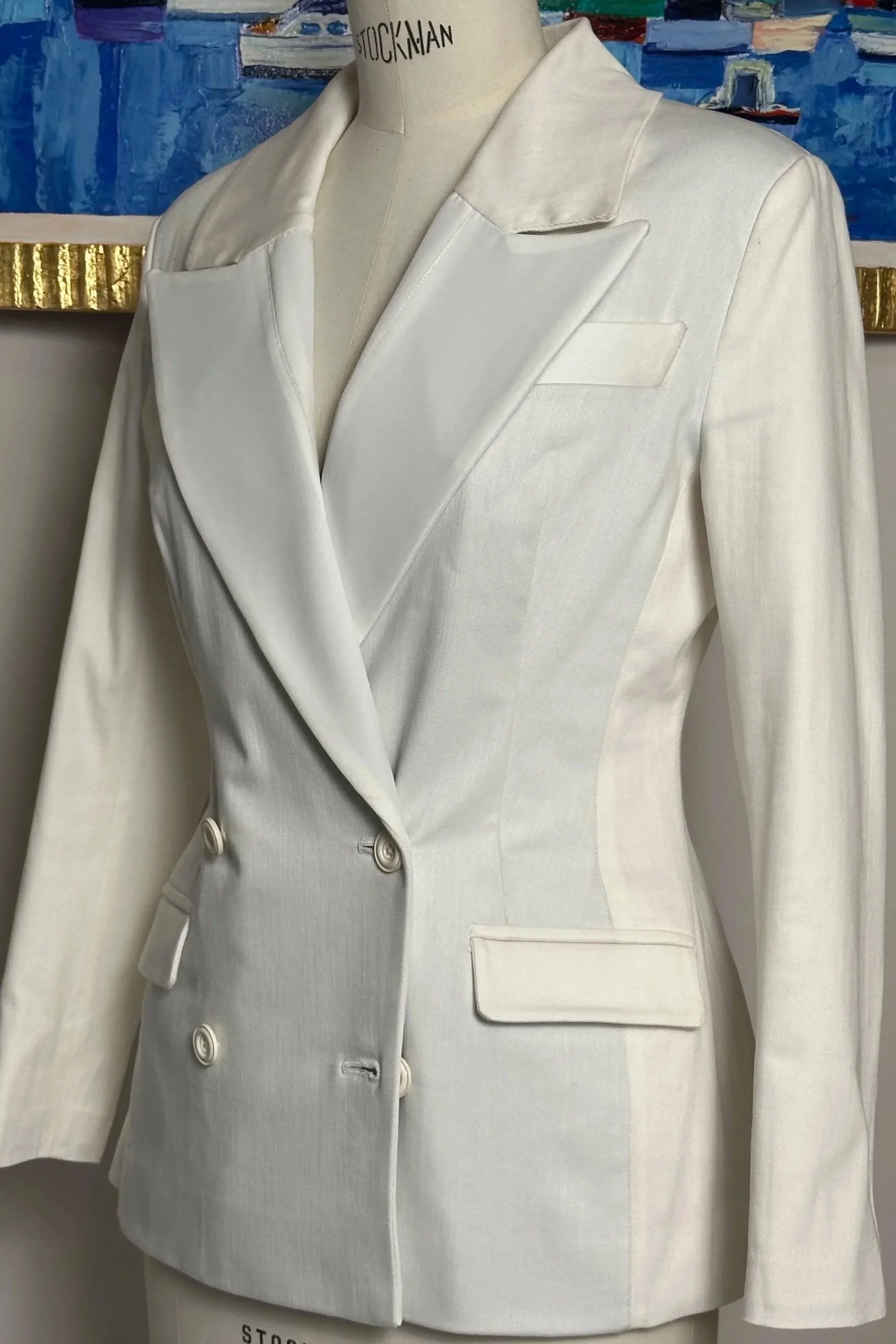
Sometimes we notice a suit before identifying its cloth or details. The proportions of its upper and lower halves, their fabric and the way the ensemble is worn seem to share one intention. That coherence does not come from a universal formula. It develops through connected decisions, then finds its test on the wearer, in her movements and in everyday life.
Creating a bespoke suit: understanding the time involved
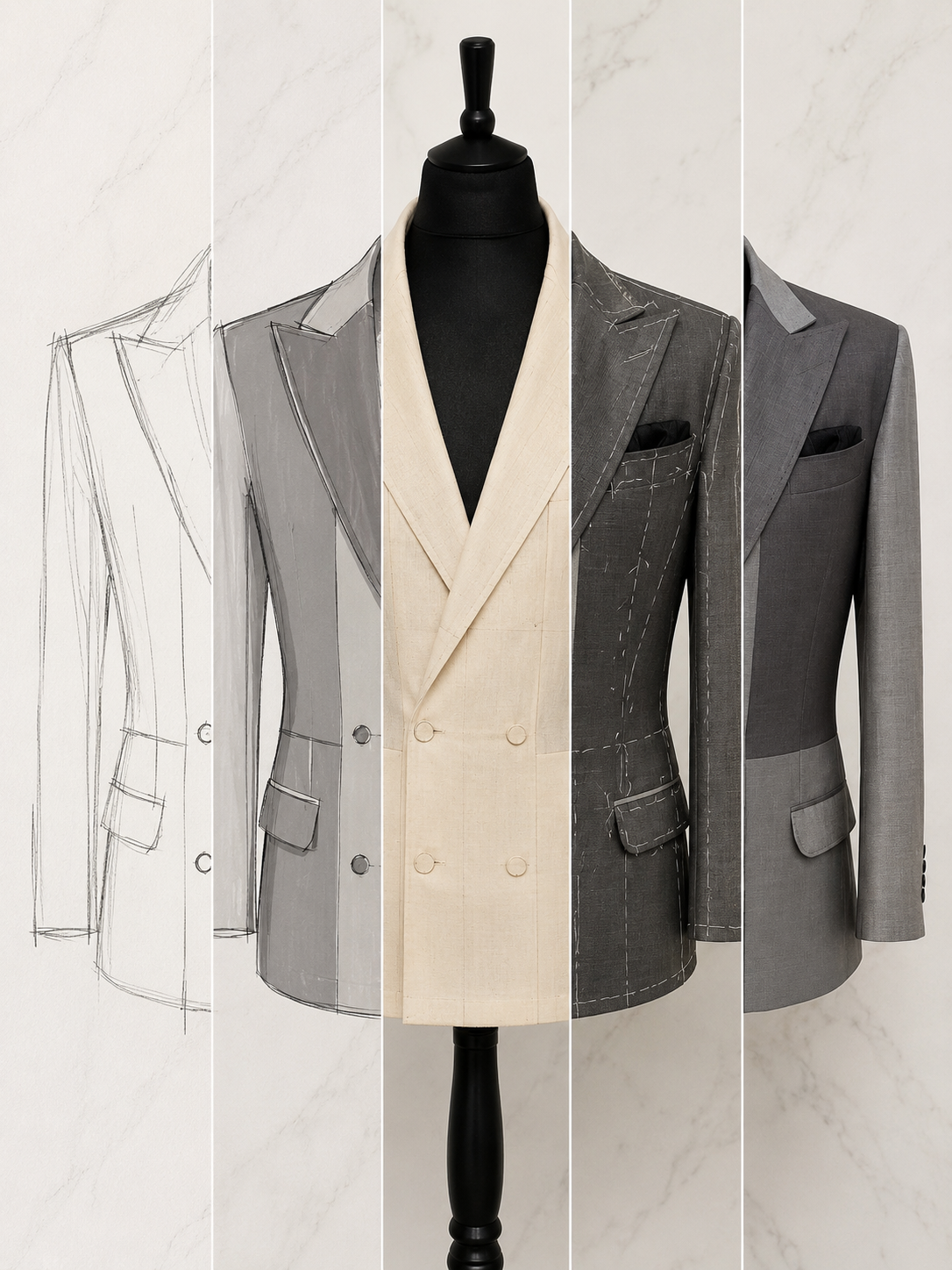
How many hours does a bespoke suit take to make? The question seems to call for a number, yet two ensembles can involve very different work. The cut of the trousers or skirt, the jacket’s construction, patchwork and ornament all belong to the same project. To understand the time behind a suit, it helps to follow the decisions that develop the whole silhouette rather than look for one duration that applies to every commission.
Gaïa: the couture suit, from atelier work to silhouette
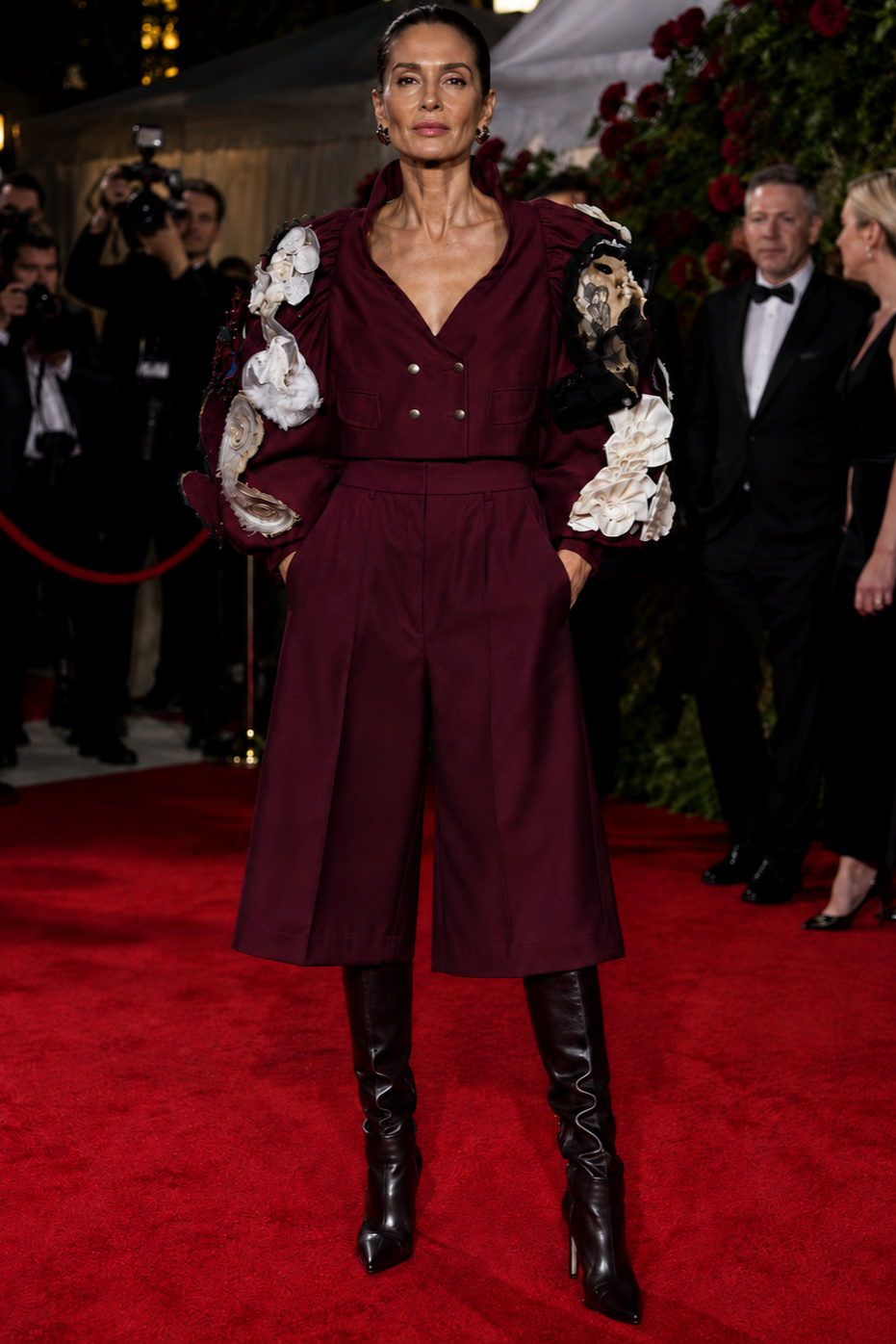
The Gaïa suit is first understood as a silhouette: deep burgundy, a cropped upper half, a double-breasted front and balloon sleeves that relate to the line below. Within this ensemble from Le Vestiaire des Immortels, the jacket concentrates much of the work on volume and ornament. Atelier photographs connect the worn silhouette with its construction details. The 130 hours of creation recorded by the Maison gain a tangible context, without reducing the suit to a number.

The bespoke experience: preparing for each stage
A first meeting often raises practical questions. Do you need to know exactly what garment you want, bring photographs or have a fabric in mind? A bespoke suit project can begin with an open idea and develop through a sequence of decisions. Understanding the purpose of each stage allows you to participate with confidence, without needing to know the technical language of tailoring.
Made-to-measure and bespoke: the method behind the words
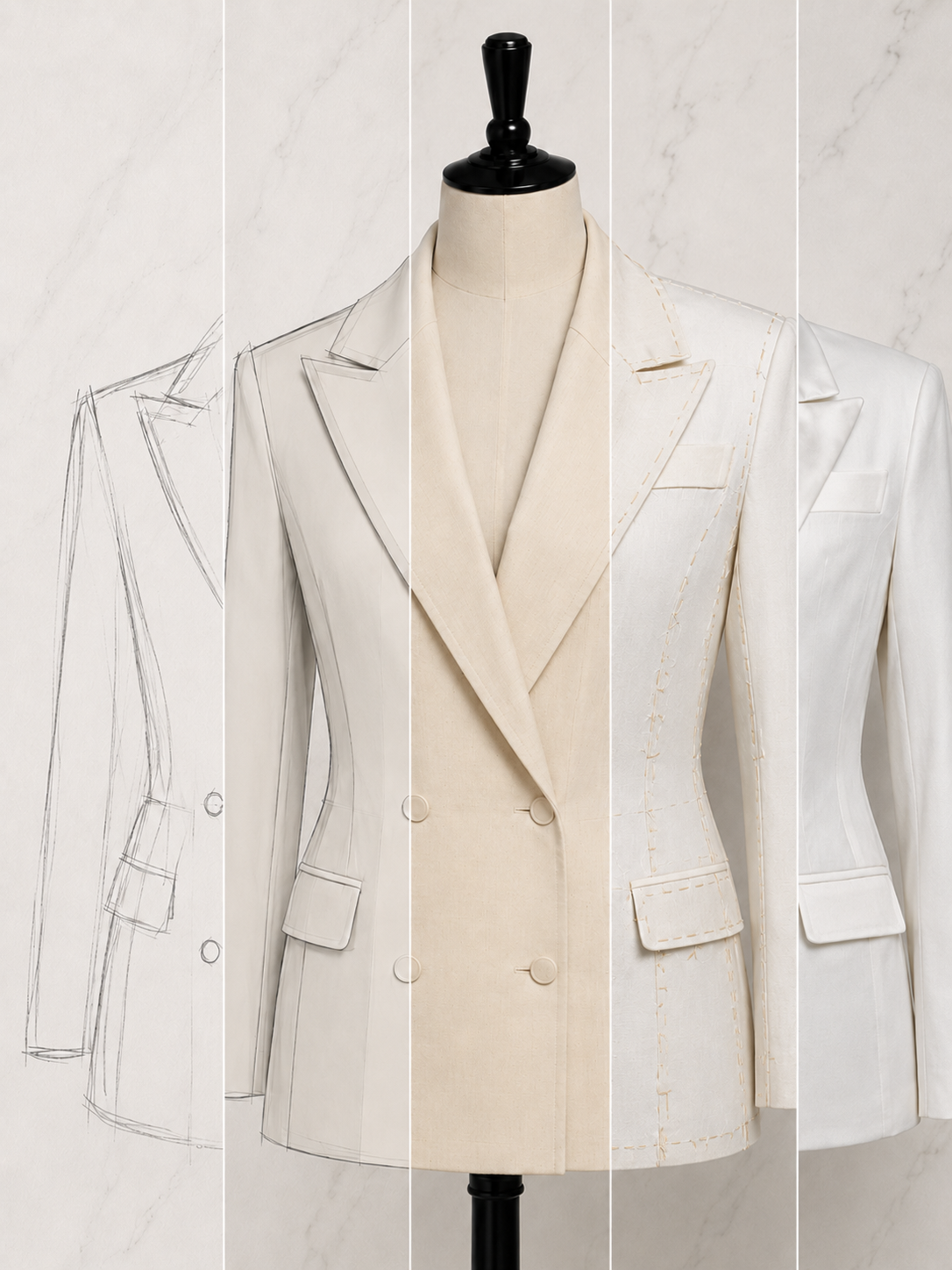
Made-to-measure, bespoke, sur-mesure and grande mesure are sometimes used as if they were interchangeable. Yet they can point towards different methods and different degrees of individual development. When commissioning a suit, the useful questions concern its starting point, the role of fittings and the decisions genuinely open to you. Precise language should clarify the offer rather than take the place of an explanation.